
Selecting the 2026 best Robot Warehouse Picking system requires more than comparing impressive videos. Buyers need evidence from real warehouse conditions, not polished demonstrations.
Raffaello D’Andrea, a robotics researcher and co-founder of Kiva Systems, once observed, “The warehouse is a very structured environment, and that makes it ideal for robots.” His point remains relevant. Structured aisles, fixed storage locations, and repeatable order patterns create strong automation opportunities. Yet modern facilities are rarely perfect. Product sizes change. Packaging collapses. Workers leave items in unexpected places.
The strongest systems combine robotic arms, machine vision, mobile platforms, and warehouse management software. Buyers should examine pick accuracy, cycle time, payload limits, integration requirements, and maintenance support. Watch the robot handle transparent bags, reflective packaging, soft clothing, and mixed cartons. Those details expose weaknesses quickly.
Do not trust speed alone.
A fast robot with frequent exceptions can increase labor pressure. A slower system may deliver better uptime and simpler training. Total ownership cost also matters, including grippers, sensors, software updates, spare parts, and operator support. Independent customer references can reveal problems that vendor brochures omit.
This guide compares leading Robot Warehouse Picking solutions for practical buyers. It considers deployment experience, system flexibility, safety design, data visibility, and long-term reliability. No system fits every warehouse. That is the uncomfortable truth. Careful testing still beats confident predictions.
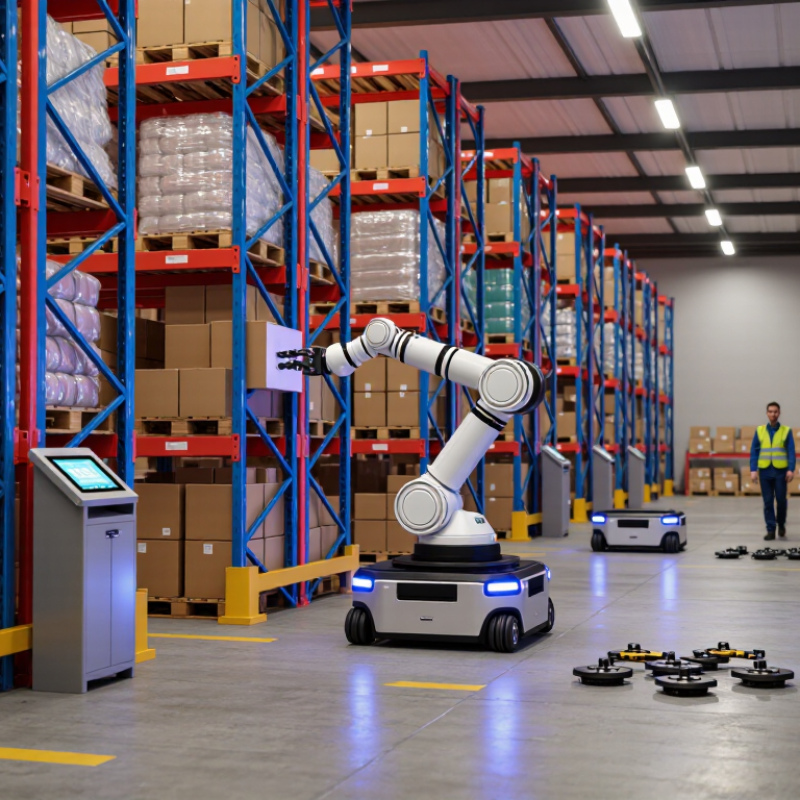
2026 Best Robot Warehouse Picking Systems for Buyers?
Robot picking systems combine three distinct designs: autonomous mobile robots (AMRs), goods-to-person stations, and robotic arms. AMRs move shelves, totes, or pallets through changing warehouse routes. Goods-to-person systems bring inventory to operators, reducing walking and search time. Robotic arms then identify, grasp, and place items. The difference matters.
The International Federation of Robotics reported 541,302 industrial robots installed worldwide in 2023. That figure signals stronger automation demand, but it does not guarantee successful picking. Warehouse buyers should test grasp accuracy, barcode reading, replenishment speed, and recovery after a dropped item. Small failures become expensive during peak shifts. They also need floor-load limits, aisle widths, battery charging, and software integration checked before purchase.
Market research from Interact Analysis projects continued expansion in warehouse mobile robot deployments through this decade. The 2024 MHI Annual Industry Report also found that many supply-chain organizations are increasing technology investment. Yet purchasing the most advanced system can be a mistake. AMRs suit variable layouts and mixed orders. Goods-to-person works better with dense, predictable inventory. Robotic arms perform best when packaging, lighting, and item presentation remain controlled. Some products still require human judgment. That limitation is easy to underestimate. Pilot tests should measure orders per hour, mis-picks, labor changes, maintenance hours, and payback under realistic demand, not showroom conditions.
Robot Picking Systems Defined: AMRs, Goods-to-Person, and Robotic Arms
The chart compares representative throughput ranges measured in picks per operator or robotic station per hour. AMR-assisted person-to-goods systems generally reduce walking and preserve flexible workflows, goods-to-person systems can deliver higher and more consistent operator productivity, and robotic arms are suited to repetitive, highly structured SKU handling. Actual results vary with item size, order profiles, storage density, workstation design, integration quality, and exception handling.
Indicative industry ranges synthesized from commonly reported warehouse automation performance levels; not vendor-specific figures.
2026 Best Robot Warehouse Picking Systems for Buyers?
Market adoption is no longer theoretical. MHI’s 2024 Annual Industry Report found that 55% of surveyed firms use robotics and automation. This figure signals practical acceptance across warehouses, but it does not guarantee fast payback. Adoption varies by order volume, labor availability, product size, and aisle design.
Choose carefully. The International Federation of Robotics reported 541,302 industrial robots installed worldwide in 2023, showing continued automation investment across manufacturing and logistics. However, warehouse picking requires different evidence. Buyers should test grasp accuracy, tote compatibility, replenishment speed, and recovery after a dropped item. A system that handles 600 picks per hour may struggle with soft packaging or irregular cartons.
Real-world trials matter more than polished demonstrations. Measure completed orders, not only robot speed. Record jam frequency, operator training time, maintenance access, and software integration delays. MHI’s data reflects respondents, not every warehouse, so the 55% figure should be treated as a market indicator rather than a universal benchmark. That distinction is easy to miss.
Small flaws become expensive at scale. A ten-second delay repeated thousands of times can reshape labor savings. Buyers should request transparent uptime records and pilot results from similar operating conditions. Even then, forecasts remain imperfect. A careful procurement team leaves room for manual handling when product variety exceeds automation assumptions.
| System Type | Best-Fit Picking Profile | Typical Load | Typical Throughput Range* | Storage-Density Potential | Human Role | Buyer Considerations |
|---|---|---|---|---|---|---|
| Autonomous Mobile Robots for Tote or Cart Transport | Mixed-SKU ecommerce, retail replenishment, and flexible piece-picking operations | Totes, cartons, or carts; commonly about 20–600 kg per robot, depending on configuration | Approximately 100–500 picks per operator per hour in goods-to-person workflows | Medium; uses existing shelving or racks with limited structural modification | Item identification, exception handling, replenishment, and quality checks | Strong flexibility and relatively fast deployment; performance depends on travel distance, workstation design, and fleet orchestration |
| Automated Storage and Retrieval Shuttle Systems | High-volume, high-SKU operations requiring dense buffer storage and predictable order flow | Totes, trays, or cartons; commonly about 20–50 kg per storage location | Approximately 300–1,000 storage or retrieval movements per hour per system, depending on layout | High; vertical storage and dense aisle configurations can significantly reduce floor-space requirements | Order verification, replenishment, exception handling, and workstation picking | High capital and infrastructure requirements; best where SKU velocity and inventory accuracy justify fixed automation |
| Vertical Lift and Carousel Picking Systems | Small parts, maintenance items, pharmaceuticals, and high-value inventory | Bins, trays, and small cartons; usually handled manually at the presentation station | Approximately 100–400 picks per hour per operator, depending on SKU mix and presentation sequence | Very high for small-item storage; uses vertical building height and reduces walking | Picking, verification, replenishment, and exception resolution | Effective when inventory is compact and access-controlled; building height, fire protection, and load limits must be checked |
| Robotic Piece-Picking Cells | Repeatable piece picking for uniform packaging, stable order profiles, and high-volume outbound operations | Individual items generally ranging from small parcels to several kilograms, subject to gripping limits | Approximately 300–1,000 picks per hour in suitable, well-presented applications | Medium to high when integrated with automated storage or organized item presentation | Replenishment, difficult-item handling, quality inspection, and recovery from failed picks | Vision and gripping performance are critical; irregular, deformable, reflective, or tightly packed items may reduce reliability |
| Automated Pallet Storage and Retrieval | Case-pick, reserve storage, pallet replenishment, and high-throughput distribution centers | Full pallets or palletized cases; commonly up to approximately 1,000–1,500 kg per load position | Approximately 50–250 pallet movements per hour, depending on crane, shuttle, and layout design | High; particularly suitable for tall buildings and large reserve inventories | Pallet inspection, exception handling, replenishment, and order consolidation | Requires standardized pallets, accurate inventory data, structural planning, and robust fire-safety design |
| Goods-to-Person Workstations | Order fulfillment centers seeking reduced walking, ergonomic improvement, and consistent operator productivity | Totes, cartons, bins, or shelves presented to an operator | Approximately 200–600 picks per hour per operator, depending on item complexity and batching | Medium to high; depends on the connected storage technology and buffer capacity | Picking, scanning, packing, replenishment, and exception handling | Often provides measurable ergonomic benefits; workstation design and order sequencing strongly influence results |
2026 Best Robot Warehouse Picking Systems for Buyers?
The best warehouse picking system is not the fastest machine. It is the one that fits daily work. Start with the SKU profile: dimensions, weight, packaging, demand frequency, and storage location. A tote of small, stable items behaves differently from irregular cartons. Measure order lines per hour, not orders alone. Also record replenishment time. These details expose hidden labor.
Throughput should match real demand, including peaks, returns, and shift changes. A system rated at 600 picks per hour may deliver less after travel, scans, jams, and replenishment. Track sustained pick rate across a full shift. Do not rely on a ten-minute demonstration. During one pilot review, an early estimate looked impressive but ignored mixed-SKU orders. The measured rate fell when operators needed extra checks. That gap was useful. It showed where workflow design, not robotics, needed attention.
Buyers should test representative orders before selecting equipment. Include fragile products, empty slots, barcode variations, and urgent waves. Compare pick accuracy, operator walking distance, recovery time, and training effort. A good rate with frequent stoppages is not good performance. Keep a small manual process during testing. It reveals whether automation improves the whole workflow or only one station. Recheck the numbers after two weeks. Early results can be misleading.
2026 Best Robot Warehouse Picking Systems for Buyers?
A buyer scorecard should begin with measurable accuracy, not a polished demonstration. Test each system across mixed cartons, damaged labels, reflective packaging, and rushed orders. The International Federation of Robotics reported 541,302 industrial robot installations in 2023, a 10% year-on-year increase. Yet more robots do not guarantee fewer picking errors. Require blind trials, item-level accuracy data, exception rates, and recovery time.
Safety needs evidence. Check stopping distances, scanner coverage, aisle behavior, manual handoff points, and operator training. Align testing with ISO 3691-4 guidance for driverless industrial trucks. Integration deserves equal weight. The system should exchange inventory, order, location, and maintenance data through documented interfaces. MHI’s 2024 Annual Industry Report identifies labor pressure and technology investment as continuing supply-chain priorities. That supports automation, but not careless spending. Total cost must include installation, software, integration labor, battery replacement, downtime, and retraining. A low purchase price can become expensive quickly.
Tips: Request a 30-day pilot. Use your own order history. Measure picks per hour, accuracy, safety events, recovery minutes, and energy use. Ask for three-year operating costs. Also test failure. Can staff continue safely when the network disconnects? I would not trust a perfect demo. Real warehouses are noisy, uneven, and occasionally messy. The scorecard should show those weaknesses, not hide them.
In 2026, buyers should rank picking systems by measurable payback, not impressive demonstrations. Start with a 36-month financial model. Include equipment, integration, maintenance, training, and downtime. Compare these costs with saved labor hours, fewer errors, and higher order throughput. A system returning its investment within 24 months deserves serious attention. However, payback can look better on paper than on a busy warehouse floor.
Scalability should be tested against seasonal demand, not average volume. Ask whether the system can expand from 20,000 to 40,000 daily picks without rebuilding the layout. Check aisle width, charging space, software capacity, and human work zones.
During site evaluations, I would request a live test using slow-moving items, fragile cartons, and mixed-size orders. Easy products can hide difficult limitations. That matters.
Labor savings require careful measurement. Count walking minutes, lifting tasks, replenishment trips, and exception handling before installation. Then measure the same activities after 30, 90, and 180 days. A system may reduce picker travel but create more supervision work. That is not a complete saving. Workers also need practical training, clear safety procedures, and accessible manual controls. My ranking would favor systems with reliable recovery processes, transparent performance data, and flexible deployment. I would leave room for doubt, because actual warehouse conditions often expose assumptions that the spreadsheet missed.