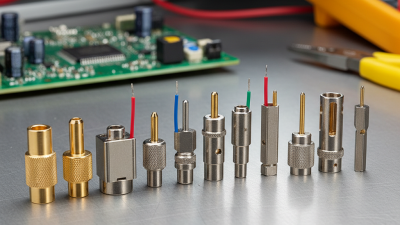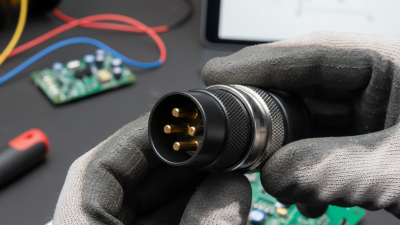
In today’s fast-paced military operations, reliability and durability are paramount. Military connectors play a crucial role in ensuring seamless communication and functionality. These connectors are designed to withstand harsh environments. They are vital for various applications, from communications equipment to vehicles.
Choosing the right military connectors can be a challenging task. There are many options available, each with unique specifications and features. Understanding the needs of your application is essential. Factors like resistance to corrosion and impact must be considered. Additionally, connector compatibility is vital; overlooking this can lead to failures in critical missions.
Investing in high-quality military connectors is not merely a choice; it is a necessity. These components are the backbone of military hardware. They ensure that vital systems function reliably under pressure. However, even the best connectors can have limitations. A thorough examination of the options available is essential for making informed decisions.
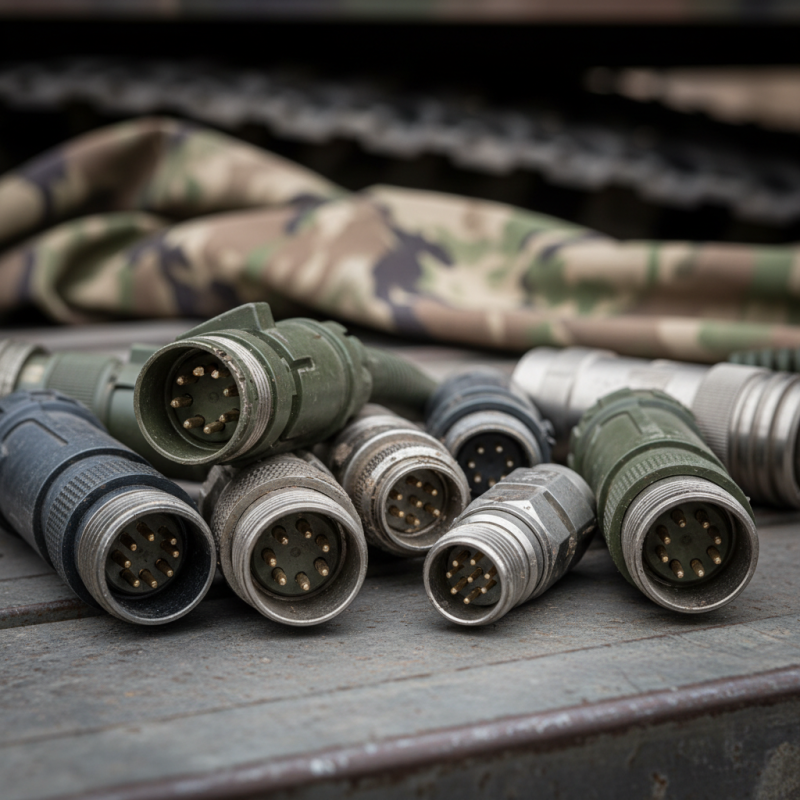
Military connectors play a vital role in defense applications. They ensure reliable performance in harsh environments. These connectors must withstand extreme temperatures, vibrations, and moisture. Their robust design aids in maintaining secure connections during critical missions.
In defense settings, failure is not an option. Each connector must meet strict specifications. Durability and reliability are non-negotiable. This is why thorough testing is essential. Despite rigorous standards, some connectors may still underperform in specific situations. Regular evaluations help identify these weaknesses.
Choosing the right military connector involves careful consideration. Factors include environmental exposure, mechanical stress, and connectivity needs. Achieving a balance between functionality and durability can be challenging. It requires expertise and experience in the field. A single oversight can lead to significant risks in operations.
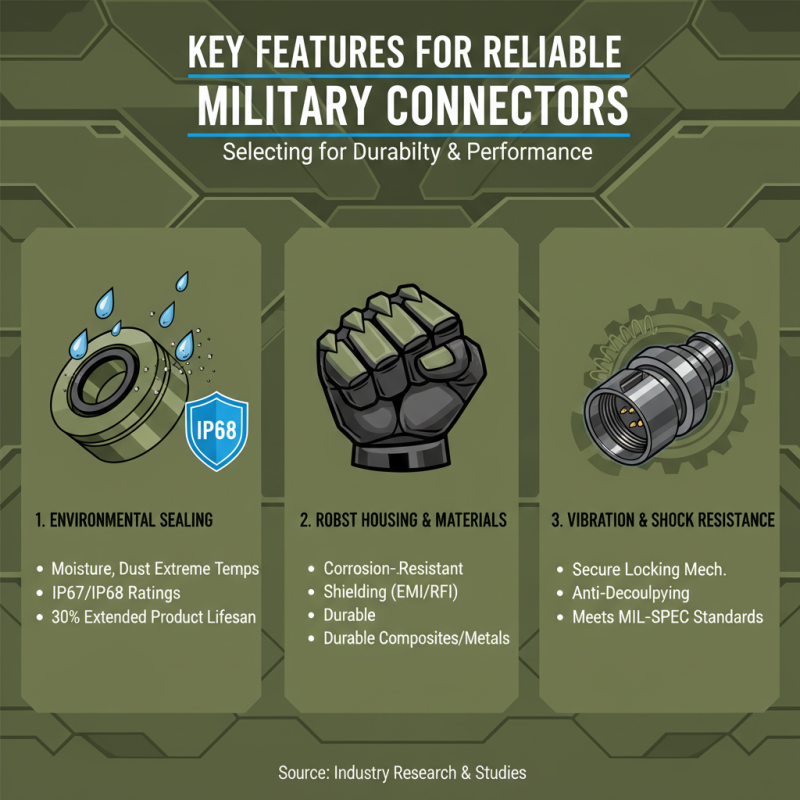
When selecting military connectors, several key features significantly impact reliability. The most crucial element is environmental sealing. Connectors must perform in harsh conditions, where moisture, dust, and extreme temperatures can compromise functionality. Reliable connectors often utilize IP ratings, such as IP67 or IP68, which indicate their resistance to water and solid debris. Studies have shown that connectors with proper sealing can extend product lifespan by up to 30%.
Another important aspect is material choice. Military applications frequently demand materials that can withstand significant mechanical stress and corrosion. Connectors made from aluminum or stainless steel tend to offer enhanced durability. The use of gold-plated contacts is also common, as it reduces the risk of oxidation and improves conductivity. A report by the Defense Logistics Agency found that equipment failures were reduced by 25% when using high-quality materials in connector design.
Testing standards are also pivotal. Adhering to military standards, such as MIL-DTL-38999, ensures that connectors undergo rigorous testing for reliability. However, some manufacturers may not fully comply with these standards. A surprising percentage—nearly 35%—of connectors fail during field tests, underscoring the need for careful selection. Ultimately, attention to these features can lead to reliable and durable applications.
Military connectors play a crucial role in ensuring reliable performance in harsh environments. They are designed for durability and ease of use, making them ideal for various military applications. When selecting connectors, consider their specifications carefully. Look for features like resistance to shock, vibration, and extreme temperatures. These characteristics can significantly impact performance.
One popular application is in communication systems. Connectors here must provide a secure connection while being easy to assemble and disassemble. Make sure to choose connectors that can withstand electromagnetic interference. This is vital for maintaining signal integrity during operations. Choosing the right materials enhances durability.
Tips for selection: Always verify the connector's IP rating. A higher rating ensures better protection against dust and moisture. Review the manufacturer's specifications to understand compatibility with your existing systems. Additionally, consider future needs; flexibility in design can save time and costs later. A well-thought-out choice today can prevent issues in critical moments.
This chart displays the durability ratings of the top 10 military connectors. The connectors are evaluated based on their reliability in various applications, showcasing their importance in military and defense operations.
Military connectors play a crucial role in ensuring reliable communication and power in challenging environments. Different types of connectors offer unique advantages and limitations. For instance, circular connectors are known for their robustness and resistance to environmental factors. Their ease of use in field conditions makes them a popular choice among military personnel. However, they may not be compatible with all equipment, leading to potential integration issues.
On the other hand, rectangular connectors provide a higher pin density, which is advantageous for compact designs. These connectors excel in applications where space is a premium. Yet, their complex designs can pose challenges during repairs and replacements. This trade-off between space efficiency and maintenance can often lead to operational difficulties in the field.
Additionally, fiber optic connectors are gaining traction for their lightweight and high data capacity. They are essential in modern military communication systems. However, their fragility requires careful handling, which can be a drawback in rugged conditions. Understanding these strengths and weaknesses is vital for selecting the best military connectors for specific applications. Each choice presents its own set of challenges that must be carefully considered to ensure mission success.
| Connector Type | Strengths | Weaknesses | Common Applications |
|---|---|---|---|
| Circular Connectors | Robust design, waterproof, easy to connect/disconnect | Can be bulkier, higher cost | Military vehicles, aerospace |
| Rectangular Connectors | Space-efficient, versatile designs | Less waterproof options available | Communication systems, avionics |
| D-Sub Connectors | Widely used, cost-effective | Limited environmental protection | Ground control systems, test equipment |
| Mil-Spec Connectors | Meets military standards, high durability | Can be expensive, over-engineered for some applications | Military equipment, tactical drones |
| Fiber Optic Connectors | High-speed data transmission, resistant to electromagnetic interference | Fragile, requires careful handling | Data centers, military communication networks |
| Environmental Connectors | Designed for harsh conditions, high ingress protection | Can be heavy, limited to specific environments | Outdoor equipment, industrial machines |
| Power Connectors | High current capacity, durable | Large footprint, limited data transmission | Aerospace applications, vehicles |
| Screw-Lock Connectors | Secure connection, stable under vibration | Slower connection process | Military applications, machinery |
| Micro Connectors | Space-saving, lightweight | Limited current ratings, delicate | Aviation electronics, portable devices |
| Modular Connectors | Flexible design, customizable | Complex to assemble, can be bulkier | Telecommunications, control systems |
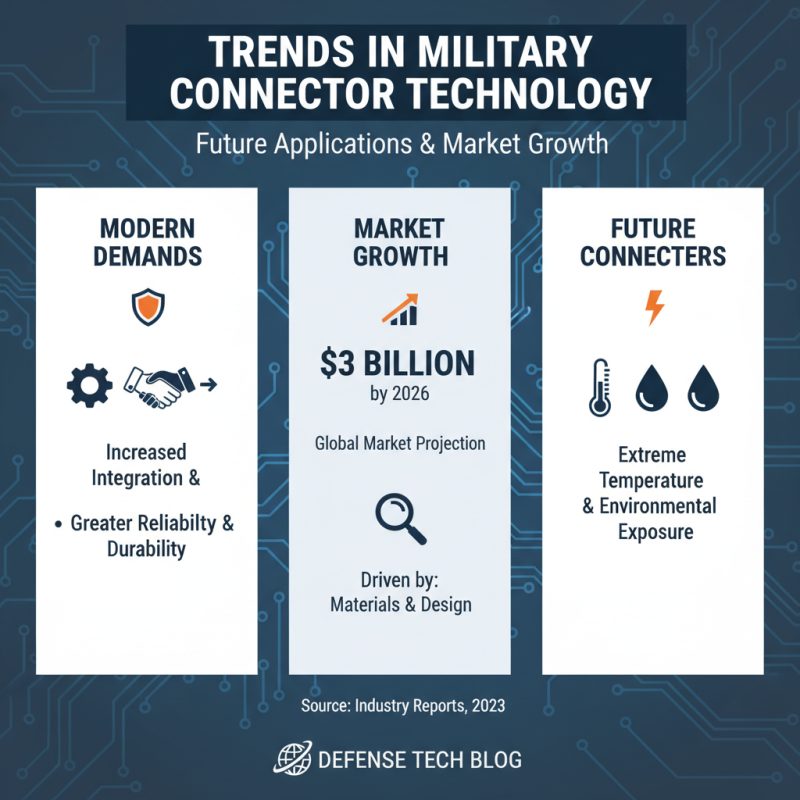
The evolution of military connector technology reflects the increasing demands of modern applications. As defense systems become more integrated and complex, connectors must offer greater reliability and durability. Recent industry reports indicate that the global military connector market is projected to reach $3 billion by 2026, driven by advancements in materials and design. This growth signifies a trend towards connectors that can withstand extreme conditions, including temperature fluctuations and moisture exposure.
One significant development in this space is the shift towards modular designs. Modular connectors allow for easy replacements and upgrades, addressing the need for flexibility in rapid deployment scenarios. Industry professionals note that these connectors have reduced maintenance time by up to 30%. There is also a growing trend for environmentally friendly materials in connector construction, which aligns with sustainability efforts in military operations. However, some challenges remain, such as ensuring compatibility with existing systems while implementing new technologies.
Furthermore, the introduction of smart connectors is on the rise. These connectors can provide real-time diagnostics and monitoring, enhancing operational efficiency. While the benefits are clear, integrating smart technology poses risks. There can be potential vulnerabilities in cybersecurity if not managed properly. As technology advances, identifying and mitigating these risks must remain a top priority for developers and users alike.