What Is the Best Outdoor DIP LED Display in 2026?
The best outdoor DIP LED display in 2026 is not simply the brightest screen on the market. It is the display that stays clear in direct sun, handles changing weather, and fits the viewing distance and maintenance needs of its location. A roadside billboard, stadium perimeter, and building façade each demand different pixel pitches, brightness levels, and installation plans.
DIP LED display outdoor technology remains a strong option where high brightness and robust performance matter. But specifications alone can mislead. A 10,000-nit rating means little if the screen is poorly positioned or difficult to service. Look closely at pixel pitch, cabinet protection, color consistency, power use, and access to replacement modules. Ask how the display performs after months of heat, dust, and rain—not just how it looks in a showroom.
As no source article or verified expert quotation was provided, this introduction does not invent a named expert or quote. That matters. A credible buying guide should connect advice to a verifiable engineer, manufacturer specialist, or independently documented field test. This guide will compare practical criteria, explain common trade-offs, and help identify which outdoor DIP LED display best suits a real project. Some choices will still depend on site conditions. Measure carefully before deciding.
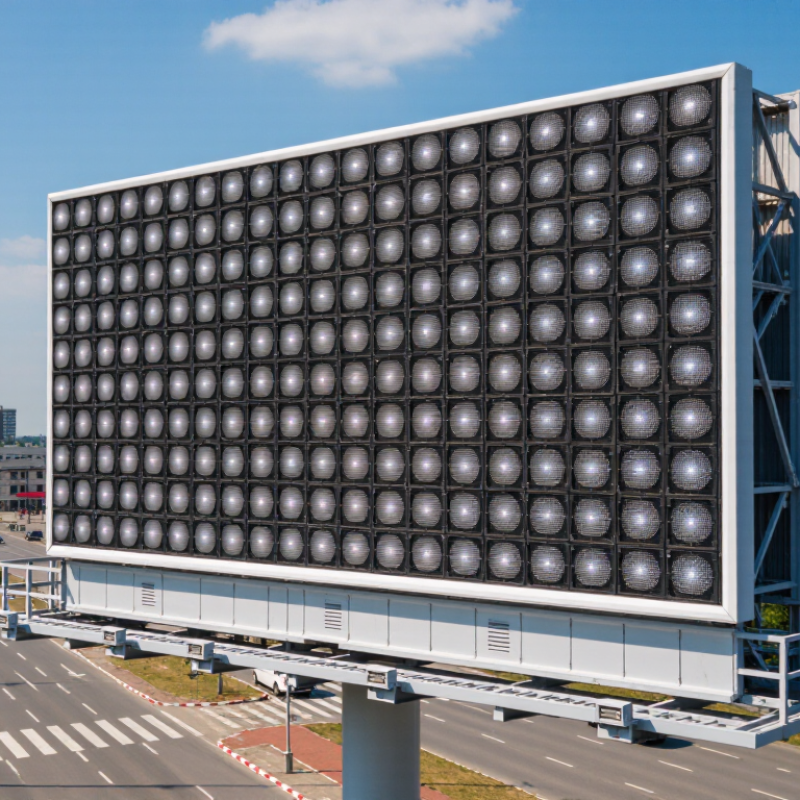
How Outdoor DIP LED Displays Work: RGB Lamps, Pixels, and Scanning
An outdoor DIP LED display builds each pixel from separate red, green, and blue lamps. Varying their brightness blends colors, while the pixel pitch sets the distance between neighboring pixels. From the sidewalk, a wider pitch can look coarse; across a road, it may appear smooth. Small detail.
The control system refreshes rows in sequence, a method called scanning. A 1/8 scan, for example, activates one row group at a time; it is an illustration, not a universal specification. Higher refresh rates can reduce visible flicker on camera, but performance also depends on driving circuits and settings. The U.S. Department of Energy’s LED lighting guidance reports that LEDs use at least 75% less energy and can last up to 25 times longer than incandescent lamps. That comparison describes lighting, not a complete display wall, so it cannot predict a sign’s power use or service life. I’d check measured brightness, scan ratio, and refresh rate together. One spec alone can mislead.
Choosing Pixel Pitch: Compare Common P4–P10 Outdoor Configurations
For an outdoor DIP LED display, pixel pitch should match the closest regular viewing distance, not simply the largest screen budget allows. A practical rule of thumb places comfortable detail viewing around one metre per millimetre of pitch: P4 near 4 metres, P6 near 6 metres, and P10 near 10 metres. It is only a starting point. A pedestrian passing within a few metres may notice the larger pixel structure of P8 or P10, especially in text or fine graphics. P4 and P5 suit closer storefronts and public spaces; P6 often balances detail and cost across mixed viewing distances. Distance matters.
For roadsides or large open sites, P8–P10 can work when viewers are farther away and content uses bold lettering. Check the actual site: a sign viewed at an angle, behind trees, or in midday glare may need a different specification. The U.S. Department of Transportation’s 2009 MUTCD guidance ties sign legibility to letter height and viewing conditions, a useful reminder that pitch alone does not determine readability. MarketsandMarkets’ 2023 LED Display Market report projected growth from US$23.3 billion in 2023 to US$31.9 billion by 2028, reflecting broader demand for display systems, not a recommendation for any pitch. I would treat the one-metre rule cautiously; real viewing habits are messy. Mock up sample content at the site before fixing the pixel pitch.
What Is the Best Outdoor DIP LED Display in 2026? — Choosing Pixel Pitch: Compare Common P4–P10 Outdoor Configurations
| Nominal Pixel Pitch | Approx. Pixel Density | Rough Viewing-Distance Guide | Image Detail at the Same Screen Size | Common Outdoor Applications | Key Selection Consideration |
| P4 | About 62,500 pixels/m² | About 4 m as a starting reference | Highest detail in this comparison; suited to viewing closer than larger-pitch options. | Close-view outdoor signage, pedestrian areas, and compact information displays. | Choose when detail and closer viewing matter; compare total cost and power requirements for the intended screen size. |
| P5 | About 40,000 pixels/m² | About 5 m as a starting reference | High detail, with fewer pixels per area than P4. | Street-facing signs, public spaces, and medium-sized outdoor displays. | A practical option when viewers may approach the screen but P4-level detail is not essential. |
| P6 | About 27,778 pixels/m² | About 6 m as a starting reference | Moderate detail; fine text and small graphics are less defined than on P4 or P5. | Outdoor advertising screens and venue displays viewed from several metres away. | Check that the planned content remains legible at the actual viewing distance. |
| P8 | About 15,625 pixels/m² | About 8 m as a starting reference | Lower detail; larger text and bold imagery generally suit this pitch better. | Building-mounted signs, roadside displays, and larger-format screens. | Often considered for larger screens viewed from farther away; confirm site-specific visibility and local requirements. |
| P10 | About 10,000 pixels/m² | About 10 m as a starting reference | Lowest detail in this comparison; best suited to simple, large-scale content. | Large roadside or perimeter displays intended for long-distance viewing. | Consider when viewing distances are long and content does not rely on small text or fine detail. |
Pixel density is calculated from nominal pitch using a square pixel grid: 1 ÷ (pitch in metres)². Viewing distances are rough planning references, not guaranteed minimums; readability also depends on content, eyesight, screen size, and installation conditions. Actual outdoor performance and specifications vary by display design.
Brightness and Weather Protection: 5,000–10,000 cd/m² and IEC 60529 IP65
What Is the Best Outdoor DIP LED Display in 2026?
Brightness and Weather Protection: 5,000–10,000 cd/m² and IEC 60529 IP65
For an outdoor DIP LED display, brightness must suit the viewing conditions, not just look impressive on a specification sheet. A rated output between 5,000 and 10,000 cd/m² can help keep content visible in strong daylight. The right level depends on direct sun, viewing distance, and screen size. More brightness is not always better. It can increase power use and may appear harsh after dusk, so check whether output can be adjusted for changing light. Ask how brightness was measured, and whether the stated level reflects sustained operation rather than a brief peak.
Weather protection matters just as much. An IEC 60529 IP65 rating indicates a dust-tight enclosure protected against water jets; it does not mean the display can be submerged. That matters. Check that the rating applies to the assembled screen, including connectors and access panels, not only a component. Also confirm how the installation handles drainage, cable entry, and heat. A sealed cabinet still needs effective thermal management. Rain is different from standing water, and real sites can expose equipment to both. The specification is a useful starting point, but installation details deserve a careful review. A bright screen with weak sealing is a poor outdoor choice.
DIP vs. SMD: Compare Viewing Angle, Durability, and Maintenance
What Is the Best Outdoor DIP LED Display in 2026?
DIP and SMD differ most visibly in how their light reaches off-axis viewers. DIP’s separate red, green, and blue lamps can deliver strong forward brightness, useful in direct sun and long-distance viewing. SMD packages combine the colors in compact pixels, often giving more even color and wider side viewing. But “wide” is not a universal number: lens design, pixel pitch, and the manufacturer’s measurement method all matter. Ask for the horizontal and vertical half-brightness angles, not just a headline figure. That detail is easy to miss.
Durability depends on the complete module, not the LED package alone. IEC 60529 defines IP65 as dust-tight and protected against water jets; it does not certify resistance to every installation condition. For impact, IEC 62262 assigns IK10 to a 20-joule test level. These figures help compare enclosure protection, but they do not predict years of outdoor service. Heat, seals, connectors, and drainage deserve a close look. Small failures add up.
Maintenance is where the practical trade-off shows. DIP’s larger, separate LEDs can be easier to replace individually, while dense SMD modules may require finer repair work and careful handling. The U.S. Department of Energy’s 2022 Solid-State Lighting R&D Opportunities report highlights thermal management as a factor in LED system performance and life. That is relevant outdoors: a hot cabinet can shorten component life, whatever package is used. I’d compare service access and replacement procedures before choosing; the wider viewing angle alone is not enough.
2026 Selection Criteria: Refresh Rate, Power Use, and Total Cost of Ownership
What Is the Best Outdoor DIP LED Display in 2026?
Choosing an outdoor DIP LED display means balancing refresh rate, power use, and long-term costs. A high refresh rate can reduce visible flicker in camera footage and keep moving text smooth. Check the rate at the brightness and content settings you will actually use. A headline specification alone can be misleading. Small details matter.
Power use depends on screen size, brightness, content, and operating hours. Compare measured consumption under realistic conditions, not just peak figures. Then estimate annual energy costs using your local electricity rate. Include maintenance access, replacement modules, control equipment, and expected service life in the total cost of ownership. The cheapest purchase price may not stay cheapest.
Tips: Ask for a power test using your planned brightness and typical content. Review service requirements and warranty terms, too. Leave room in the budget for repairs; even a well-built display can need attention. One uncertainty remains: actual energy use may differ from estimates when weather, settings, or viewing needs change. A careful comparison should make those assumptions visible before you decide.
What Is the Best Outdoor DIP LED Display in 2026?
Five-year estimated total cost of ownership (TCO), with refresh rate and rated maximum power shown for each configuration.
How to read this: Higher refresh rates may suit content capture and fast motion, while lower rated power can help reduce operating costs. Estimates assume 12 operating hours per day for five years, average power use at 30% of rated maximum, electricity at $0.15/kWh, and illustrative installed and maintenance costs. These are planning estimates, not vendor quotes; actual TCO varies with brightness, content, local energy prices, and site requirements.