How to Choose Electronic Connectors for Global Sourcing?
Choosing electronic connectors for global sourcing is not simply a price comparison. It is a decision about fit, reliability, supply continuity, and accountability. A connector may look suitable in a catalog, yet fail after repeated mating, vibration, humidity, or temperature changes. The small details matter. Contact plating, locking force, current rating, housing material, and tolerance can shape the entire product’s performance.
Experienced sourcing teams usually begin with the application, not the supplier’s sales pitch. They review voltage, current, signal speed, operating temperature, installation space, and expected service life. They also request drawings, material declarations, test reports, and production samples. A supplier audit can reveal practical issues, such as inconsistent crimping or poorly controlled packaging. It is wise to verify relevant technical requirements and regional compliance expectations before placing a large order. Documentation should be traceable.
No checklist is perfect.
Global sourcing also requires a realistic view of risk. A low-cost connector may create higher expenses through redesigns, field failures, or delayed production. Freight conditions, minimum order quantities, tooling ownership, and backup capacity deserve equal attention. Engineers should test samples in conditions that resemble actual use, including dust, moisture, heat, and repeated assembly. That step often exposes assumptions that looked reasonable on paper.
The strongest decision balances engineering evidence with supplier credibility. Still, judgment can be imperfect. Specifications may change, forecasts may be wrong, and one successful sample cannot prove long-term consistency. This guide explains how to compare electronic connectors carefully, ask better questions, and build a sourcing process that remains dependable across markets.
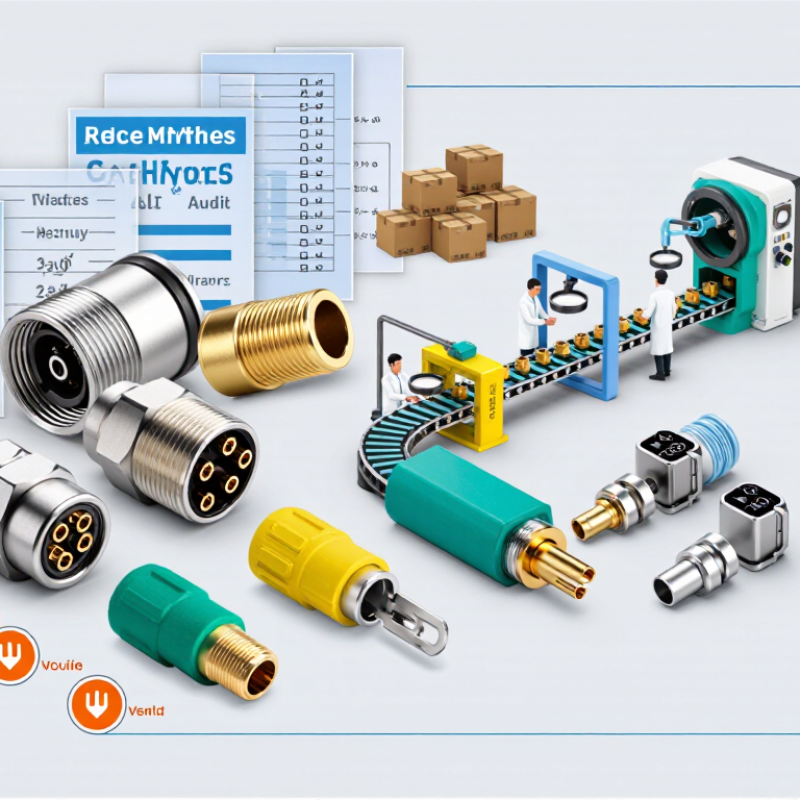
Define Voltage, Current, Pitch, and 500–10,000 Mating-Cycle Needs
How to Choose Electronic Connectors for Global Sourcing?
Connector selection starts with four measurable requirements: voltage, current, pitch, and mating durability. IEC 60664-1 links insulation coordination to working voltage, pollution level, and clearance distance. Therefore, a 24 V signal connector may need different spacing from a 400 V power connector. Do not trust voltage ratings alone. Check temperature, altitude, and surrounding materials.
Current capacity depends on contact size, conductor area, and temperature rise. IEC 60512-5-2 provides methods for evaluating current-carrying capacity and heating. A 2024 connector market report from Grand View Research estimated the global market at more than USD 80 billion, showing how widely these parts are used across equipment. Yet market size does not guarantee interchangeability. Pitch matters. A 0.5 mm pitch saves board space but demands tighter assembly control than a 2.54 mm pitch.
Mating cycles should reflect real service, not optimistic packaging. Specify 500 cycles for occasional maintenance and 10,000 cycles for frequently serviced equipment. IEC 60512 durability tests can support supplier comparisons, but test conditions still matter. Ask for cycle count, contact resistance limits, and post-test inspection records. In field work, failures often begin with vibration or poor cable strain relief. I have seen designs meet electrical ratings and still fail mechanically. That deserves a second review.
Compare ≤10 mΩ Contact Resistance and Operating Temperature Ratings
How to Choose Electronic Connectors for Global Sourcing?
When sourcing electronic connectors globally, contact resistance deserves careful testing. A specification of ≤10 mΩ can reduce voltage loss and unwanted heat. However, this value may apply only to new, clean connectors under controlled pressure. Ask suppliers for test conditions, current levels, and measurement methods. Four-wire testing gives more reliable readings than basic multimeter checks. I once treated a low resistance value as permanent. It changed after repeated mating.
Tips:
Check the operating temperature rating against the real equipment environment. A connector rated from -40°C to 105°C may suit outdoor equipment, but not every load condition. Review temperature rise at the highest current. Heat from nearby components can also reduce the safe margin. Request samples from different production lots. Inspect terminals, locking features, seals, and dimensional consistency before approval.
Use thermal cycling and mating-cycle tests during qualification. Resistance should remain near the ≤10 mΩ target after vibration, humidity exposure, and repeated connection. Small increases can become serious in high-current systems. Confirm whether the temperature rating includes the housing, contacts, seals, and cable assembly. Some documents describe only the terminal material. That detail is easy to miss. For global sourcing, compare inspection records, traceability, packaging quality, and change-control procedures. A cheaper connector may create higher field costs when contact force weakens or oxidation appears. Your test plan should reflect actual use, not only the catalogue conditions.
Audit ISO 9001 Suppliers, MOQ, Lead Time, and Full Traceability
Global connector sourcing starts with supplier verification, not a low quotation. The 2022 ISO Survey recorded 1,265,216 ISO 9001 certificates worldwide. Yet certification alone cannot prove process control. Request the certificate scope, audit date, corrective-action records, and manufacturing address. Confirm that the audited site actually produces your connector family. A paper certificate is not proof.
MOQ should match your production rhythm, cash position, and qualification plan. Ask whether MOQ applies per part number, color, plating option, or annual volume. Lead time needs two figures: standard production time and recovery time after a shortage. The 2024 IPC Global Sentiment of the Electronics Industry report continued to identify supply continuity and workforce constraints as major industry concerns. Build buffer stock only after reviewing demand volatility. Large buffers can hide weak forecasting.
Traceability must reach the carton, lot, and material record. Require lot codes, inspection results, plating details, change notifications, and certificates of conformity. A practical audit follows one sample backward, from finished connector to resin batch and production line. Keep approved drawings and revision history under controlled access. I still treat “full traceability” cautiously; many suppliers can trace shipments, but not every process input. Ask for a live traceability demonstration, not a polished spreadsheet. Photograph labels, seals, and packaging during the audit. Small details expose large gaps.
How to Choose Electronic Connectors for Global Sourcing? - Audit ISO 9001 Suppliers, MOQ, Lead Time, and Full Traceability
| Supplier Profile |
ISO 9001 Evidence |
Audit Result |
Typical MOQ |
Production Lead Time |
Traceability Coverage |
Quality Records Available |
Recommended Sourcing Position |
Profile A
Established high-volume connector manufacturer |
Valid ISO 9001 certificate; certificate scope covers design, production, inspection, and shipment |
Low risk
Document review and process audit passed |
5,000 pieces per part number |
4–6 weeks for standard parts
6–8 weeks for custom tooling |
Full lot-level traceability from incoming material to shipment |
Material certificates, inspection reports, process parameters, lot records, corrective-action reports |
Best fit for recurring global programs with stable demand and strict compliance requirements |
Profile B
Mid-sized supplier serving industrial applications |
Valid ISO 9001 certificate; annual surveillance audit recorded |
Acceptable
Minor documentation gaps closed within 30 days |
1,000 pieces per part number |
5–8 weeks for standard parts
8–10 weeks for custom parts |
Batch and shipment traceability; operator-level records available by request |
Incoming inspection, first-article report, final inspection, batch identification, packing records |
Balanced option for medium-volume sourcing and controlled product launches |
Profile C
Flexible supplier focused on low-volume customization |
ISO 9001 certificate available; scope excludes some outsourced surface-finishing operations |
Conditional
Subcontractor controls require verification |
250 pieces per part number |
3–5 weeks for standard parts
7–9 weeks for custom parts |
Internal batch traceability; outsourced-process records available only on request |
Dimensional inspection, electrical continuity results, batch labels, supplier declarations |
Suitable for prototypes and pilot production after subcontractor controls are approved |
Profile D
Trading and assembly supplier with multiple production sources |
Certificate provided, but manufacturing scope and certificate validity require independent verification |
High risk
Insufficient evidence of consistent process control |
100 pieces per part number |
2–4 weeks when stock is available
8–12 weeks for replenishment |
Shipment-level traceability; upstream raw-material records are limited |
Basic commercial inspection report and packing list; limited process records |
Use only for low-risk samples or temporary supply after incoming inspection approval |
Global Sourcing Evaluation Criteria
| Evaluation Dimension |
Suggested Weight |
What to Verify |
Minimum Acceptance Standard |
| Quality management |
25% |
Certificate number, validity, issuing body, certificate scope, internal audit and corrective-action records |
Valid ISO 9001 certification covering the relevant manufacturing process |
| Traceability |
20% |
Lot codes, material batches, tooling records, production dates, inspection results, and shipment links |
Every shipment can be traced back to production and material lots |
| Lead-time reliability |
15% |
Historical on-time delivery, capacity planning, tooling schedule, and escalation process |
Agreed delivery dates are measured and reported monthly |
| MOQ and commercial flexibility |
15% |
Minimum order quantity, price breaks, sample policy, tooling charges, and annual volume commitments |
MOQ is compatible with forecast demand and launch quantities |
| Technical conformity |
15% |
Drawing revision control, dimensional results, contact resistance, dielectric strength, mating cycles, and environmental testing |
Approved samples meet the latest drawing and applicable test requirements |
| Supply-chain resilience |
10% |
Approved subcontractors, alternative materials, capacity redundancy, logistics routes, and business-continuity planning |
Critical outsourced processes and contingency arrangements are documented |
Recommended decision rule: Select suppliers that provide valid ISO 9001 evidence, complete lot-level traceability, documented inspection results, predictable lead times, and an MOQ aligned with the purchasing forecast. Treat low price or short quoted lead time as secondary factors until quality and traceability risks have been closed.