How to Choose High Power Connectors for Global Buyers

Choosing high power connectors for global buyers requires more than comparing current ratings and purchase prices. The right choice must survive heat, vibration, moisture, repeated mating, and long-distance shipping. A connector that looks reliable in a catalog may fail beside a hot motor or inside a dusty control cabinet.

Henry W. Ott, a respected EMC engineering authority, wrote, “A connector is a discontinuity in a transmission line.” This principle matters in high power connectors because every interface can affect resistance, heat, signal integrity, and system safety. Buyers should examine contact materials, plating thickness, cable size, locking methods, insulation distance, and protection ratings. A 200-amp connector is not automatically suitable for every 200-amp application.

Real projects reveal uncomfortable details. Technicians may wear gloves. Space may be limited. Connectors may need blind mating during maintenance. A beautiful specification sheet does not show the force required to engage a difficult latch. It also does not reveal whether contacts loosen after thousands of cycles. These points are easy to overlook.

Global sourcing adds another layer of uncertainty. Product documentation should clearly state test methods, operating temperature, derating curves, and applicable certifications. Buyers should request samples and inspect crimp quality before placing large orders. Supplier experience matters, but it should not replace independent verification.

There is no perfect connector.

This guide explains how to compare high power connectors with practical evidence, careful questions, and a willingness to challenge attractive assumptions. Reliability begins before the first purchase order.
How to Choose High Power Connectors for Global Buyers

Understanding High Power Connector Types and Their Applications

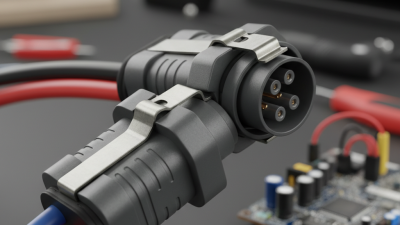
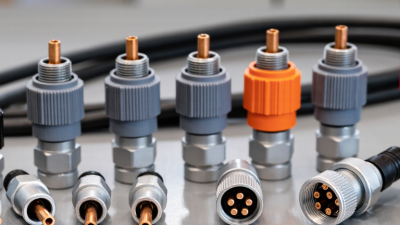
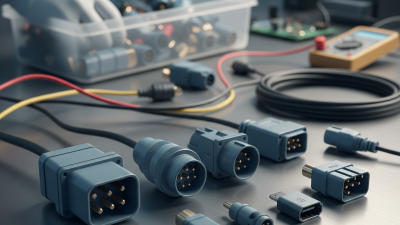
High power connectors are not a single product category. Their structure should match the application. Board-to-board connectors suit compact power modules, while wire-to-board versions simplify cabinet wiring. Busbar connectors handle short, high-current paths with fewer cables. Circular connectors are useful where vibration, dust, or frequent maintenance is expected. For battery packs, high-voltage connectors need touch-proof contacts, interlock circuits, and controlled pre-charge functions.

Application conditions matter more than headline current. The IEA’s Global EV Outlook 2024 reported nearly 14 million electric car sales in 2023, increasing demand for durable charging and battery connections. In practice, engineers should check continuous current, peak load, voltage, temperature rise, and mating cycles. A connector rated for 200 amps may still fail when airflow is poor or terminals loosen. It happens.

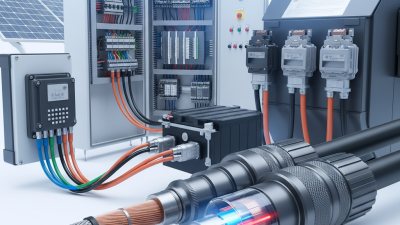
Data centers add another pressure point. The IEA’s Electricity 2024 report estimated data-center electricity use at about 460 TWh in 2022, with demand potentially exceeding 1,000 TWh by 2026. High-current connectors in power distribution systems therefore need low contact resistance, secure locking, and clear maintenance access. Buyers should also verify IP protection, creepage distance, insulation material, and certification requirements for each destination market. Field experience shows that compact designs can save space, yet they may complicate heat removal. That trade-off deserves a physical test, not only a datasheet review.

Evaluating Electrical, Mechanical, and Environmental Requirements

How to Choose High Power Connectors for Global Buyers

High power connector selection begins with the electrical load, not the catalog photograph.

Confirm continuous current, peak current, operating voltage, and allowable temperature rise. A connector rated for 300 amperes may perform differently inside a sealed cabinet. Cable size, contact resistance, and mating cycles also affect real performance. Ask for test conditions, not only headline ratings.

Mechanical requirements deserve equal attention. Check panel space, locking force, vibration resistance, and strain relief. A heavy cable can slowly stress the housing during transport or operation. Keying features can prevent incorrect assembly. However, keying alone is not enough. Clear installation instructions and visual inspection points reduce field mistakes. I would verify tolerances with the actual cable, enclosure, and mounting hardware. Small dimensional conflicts can become expensive delays.

Environmental exposure often separates a reliable connector from a short-lived one. Review ingress protection, corrosion resistance, chemical contact, UV exposure, and temperature range. Salt air, road dust, and condensation may appear together in outdoor equipment. Material compatibility needs evidence from technical data and test reports. Relevant safety and performance standards should match the destination market. Independent laboratory results are more convincing than vague marketing claims. Do not overlook service conditions. Real applications are rarely as clean as the specification sheet. A careful buyer should document assumptions, request samples, and test the complete assembly before approving volume orders.

Comparing Materials, Ratings, Safety Standards, and Certifications

Choosing high-power connectors starts with the load, not the catalog headline. Record continuous current, peak current, voltage, duty cycle, ambient temperature, and cable size. A 200 A connector may require derating at 60°C or inside a sealed cabinet. Copper-alloy contacts offer strong conductivity and mechanical durability. Tin plating suits many industrial systems, while silver plating can reduce resistance at higher loads. Housing materials such as PA66 or PBT should resist heat, impact, and chemical exposure. Silicone seals help maintain protection after repeated mating.

Ratings need evidence. Check voltage, current, temperature, mating cycles, and dielectric withstand values in the technical file. Review creepage and clearance distances for the working voltage and pollution level. Touch-safe designs matter during maintenance. For outdoor equipment, an IP rating under IEC 60529 should match real installation conditions, not just laboratory claims. IEC 61984 can support connector safety evaluation, while regional certification requirements may differ. Ask for current test reports and certificate scope. A familiar logo is not enough.

During supplier evaluation, inspect crimp samples, conductor insertion, contact retention, and torque instructions. Thermal-rise testing with the actual cable size can reveal weak points. Check whether materials are traceable and whether flame ratings apply to the complete housing. Some documents look complete but omit derating curves or salt-spray results. That gap deserves a written explanation. I would also request samples before approving volume production. One overlooked detail can cause heating, arcing, or downtime. Specifications still need field feedback.

Selecting Compatible Designs for Global Supply and Installation

How to Choose High Power Connectors for Global Buyers

Selecting a high power connector for global installation requires more than matching current ratings. According to the International Energy Agency’s Electricity 2024 report, data-centre electricity demand could more than double by 2026. The IEA’s Global EV Outlook 2024 also reported more than 17 million electric car sales in 2024. These trends increase demand for reliable, serviceable power connections across different regions.

Start with the complete installation. Check continuous current, voltage, cable size, operating temperature, vibration, and expected mating cycles. A connector rated for 250 amperes may still fail when heat builds inside a sealed cabinet. Confirm the housing’s IP rating under IEC 60529, then review creepage and clearance requirements for the intended voltage. IEC 60309 can guide industrial plug and socket selection, but local certification requirements still need verification.

Compatibility often fails at the edges. Frequency differences, metric cable glands, grounding methods, and uneven tooling can disrupt a smooth installation. A common field lesson is simple: test the connector with the actual cable, torque tool, enclosure, and technician. Not just a sample.

Ask suppliers for dimensional drawings, material declarations, test conditions, and replacement availability. Check whether terminals can be inspected without dismantling the whole panel. That detail saves time. I would also question optimistic lifecycle claims when no test method is provided. A cheaper connector may fit today, yet create expensive downtime during commissioning. Global sourcing works better when engineering, procurement, and local installers approve the same design before shipment.

Assessing Manufacturers, Quality Control, Costs, and Long-Term Reliability

Choosing high-power connectors requires more than comparing catalogue prices. A 2023 electronic-connectors market report valued the global market at approximately USD 84 billion and forecast nearly 5% annual growth through 2028. That expansion increases supplier choice, but it also creates uneven manufacturing discipline. Ask for factory audit records, material certificates, process capability data, and lot-level traceability. A capable manufacturer should explain conductor plating, insulation compounds, sealing design, and thermal limits in clear language.

Test evidence matters. Request results from IEC 60512-based testing, including contact resistance, temperature rise, vibration, humidity, and mating-cycle performance. For outdoor systems, add salt-spray and water-ingress data. Do not accept only a pass certificate. Check test conditions, sample size, failure criteria, and laboratory independence. Small details matter. A connector rated for 200 amperes may need derating inside a hot enclosure. Installation space, cable size, torque, and airflow can change real performance.

Purchase cost is only one part of reliability. Include tooling, inspection, replacement labor, downtime, and inventory risks in the total-cost calculation. A 2022 industrial maintenance report found that unplanned downtime can cost manufacturers hundreds of thousands of dollars per hour in critical operations. That figure varies widely, but the warning is useful. Ask for field-return statistics and corrective-action records. Suppliers may resist sharing them. That hesitation deserves attention. My own purchasing checklist still needs improvement: accelerated tests cannot perfectly reproduce ten years of vibration, contamination, and rushed installation. Long-term confidence comes from verified data, transparent weaknesses, and repeatable production.