2026 How to Choose the Right Board to Board Connector for Your Project?

Choosing the right board to board connector for your project is a crucial step. The right connector ensures effective communication between circuit boards. This decision affects performance, reliability, and overall system design.

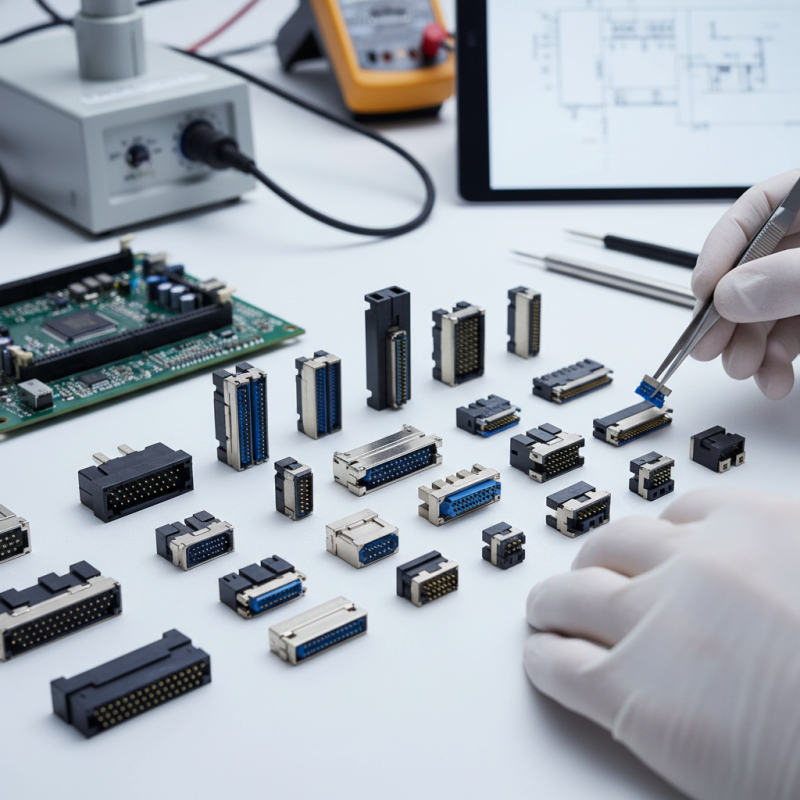
Numerous options exist in the market. Each board to board connector has unique specifications. Consider factors like size, pitch, and orientation. These details impact how well the connectors fit within your system. A poor choice can lead to issues later on.

Reflect on your project requirements. Think about future expansions or changes. Sometimes, an ideal connector may seem suitable but fails in real-world applications. Make sure to test your selections thoroughly. A thoughtful approach can save significant time and resources down the road.
2026 How to Choose the Right Board to Board Connector for Your Project?

Understanding the Basics of Board to Board Connectors

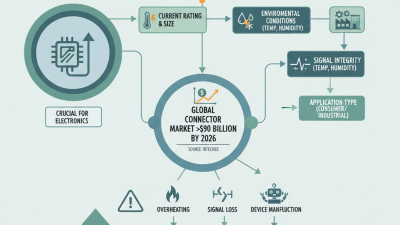
Board to board connectors are essential in modern electronics. They connect two separate printed circuit boards, facilitating both signal and power transmission. Understanding their specifications is crucial for reliable performance. According to a recent industry report, the global market for board-to-board connectors is projected to reach $3.7 billion by 2026, reflecting their growing importance in various applications.

When selecting board to board connectors, consider the pin count and spacing. Different projects require different configurations. High-density connectors save space but can complicate installations. Many rely on standard measurements, which can lead to limitations in custom designs. Additionally, data from industry analysts indicate that reliability ratings are becoming a focal point. A connector's lifecycle can significantly impact device longevity.

The choice of materials is also important. Typically, connectors are made from plastic and metal, but quality varies. The choice affects performance in thermal and mechanical environments. According to some engineers, the variation in connector grades can be surprising. Some low-cost options might perform poorly under stress. Balancing cost with quality remains a challenge for many designers.

2026 How to Choose the Right Board to Board Connector for Your Project? - Understanding the Basics of Board to Board Connectors
Connector Type Pitch Max Current Max Voltage Height Applications
Standard Connector 2.0mm 3A 125V 10mm Consumer Electronics
High-Density Connector 1.27mm 1.5A 50V 5mm Telecommunications
Power Connector 5.0mm 10A 300V 15mm Industrial Applications
Flexible Connector 0.8mm 1A 20V 3mm Wearable Devices

Key Factors in Selecting the Right Board Connector

When selecting a board-to-board connector for your project, several key factors come into play. Consider the pitch, or the distance between pins. A smaller pitch saves space but can be challenging for soldering. For intricate designs, use connectors with a pitch of 0.5 mm or 1 mm. Larger pitches make handling easier, particularly for prototyping.

Another important aspect is the number of positions. More positions can accommodate more signals. However, every additional pin adds complexity. Remember, not all projects need a full array of connectors. Consider your specific needs before finalizing.

Tips: Evaluate your layout carefully. A well-planned PCB can use fewer connectors effectively. Look at the potential heat generated. Overheating can damage components and affect performance. Finally, always remain open to adjusting your choice based on feedback during testing phases. It's easy to overlook adjustments until they become critical.

Types of Board to Board Connectors and Their Applications

2026 How to Choose the Right Board to Board Connector for Your Project?

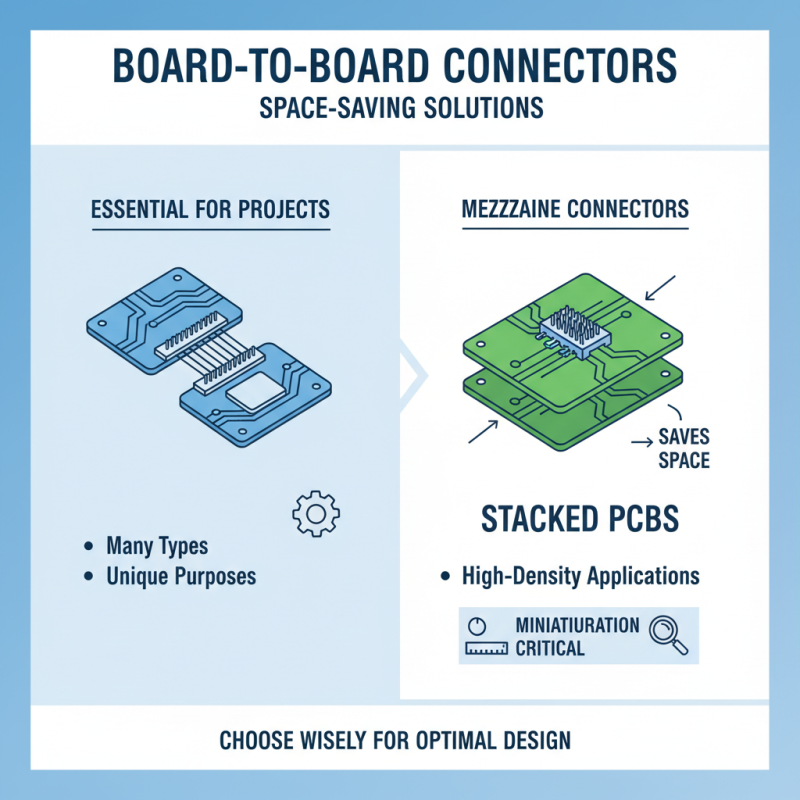
Choosing the right board-to-board connector is essential for any project. Various types of connectors exist, each serving unique purposes. One common type is the mezzanine connector. This design allows for stacked PCBs, which save space. These connectors support high-density applications where minimizing size is crucial.

Another popular option is the edge connector. It connects via the edge of a PCB, making it ideal for modular designs. These connectors often provide good signal integrity and mechanical stability. However, they may require precise edge finishing. Misalignment can lead to connection failures, which is a concern for engineers.

Flexible connectors offer adaptability in designs. They can bend or twist, accommodating movement in portable devices. Yet, they may have limited durability compared to rigid options. Assessing the application’s requirements is key. A connector that works perfectly in one scenario might not perform well in another. Always test prototypes thoroughly before finalizing the design.

Evaluating Electrical and Mechanical Specifications

2026 How to Choose the Right Board to Board Connector for Your Project?

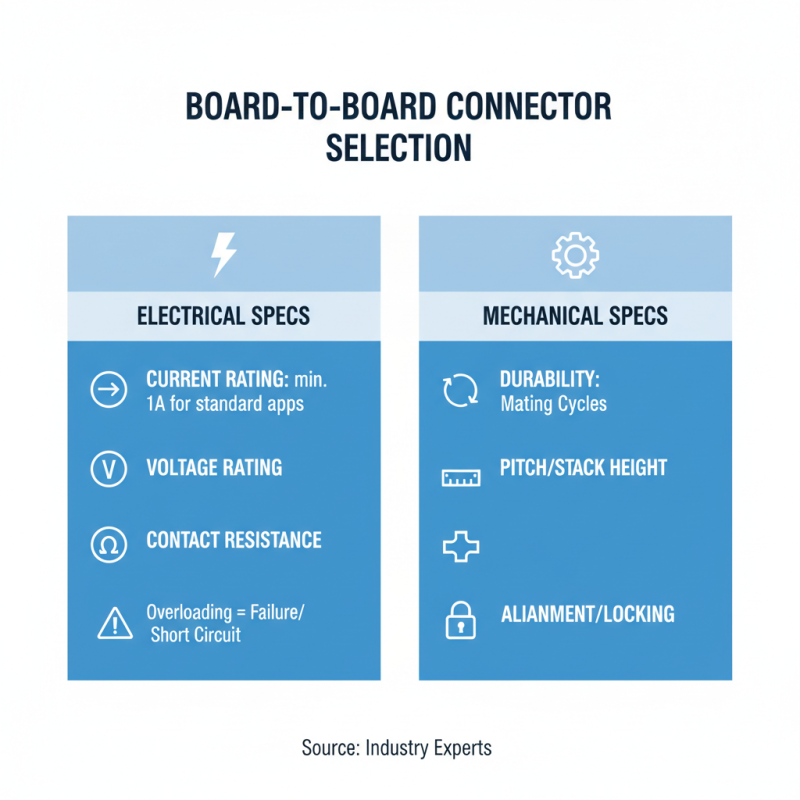
When selecting the right board-to-board connector, electrical and mechanical specifications are key. Electrical parameters include current rating, voltage rating, and contact resistance. Reports by industry experts show that connectors must handle at least 1A of current reliably for standard applications. Overloading can lead to failures and short circuits.

Mechanical specifications are equally important. Consider the size, pitch, and mounting style of the connector. Standard pitches range from 0.8mm to 2.54mm. Larger pitches allow for easier handling but can increase board space. A report by Connector Supplier highlights that designs with smaller pitches often face higher manufacturing complexity.

**Tips:** Always check the thermal performance of the connectors. High temperatures can degrade performance. Also, review compatibility with your PCB design. Misalignment can cause unreliable connections. Testing prototypes can reveal issues early. Don't overlook these factors when finalizing your choice; they could save time and costs down the line.

Best Practices for Integration and Installation of Connectors

When integrating board-to-board connectors, proper installation is crucial. Incorrect placement can lead to failures. Therefore, accuracy is vital from the start. Ensure that your PCB boards align perfectly. Misalignment often results in connectivity issues.

Tips: Use markers or jigs to aid alignment. This small detail can prevent significant headaches later on. Check your connectors thoroughly after installation. A simple inspection can save time and resources.

Consider the type of board-to-board connector you use. Some require more space than others. Keep this in mind when designing your PCB layout. Avoid overcrowding the region where connectors will be placed. It impacts the air flow and heat dissipation.

Tips: Leave some margin around connectors. This can improve durability. Additionally, review your soldering method. Inconsistent soldering can compromise the integrity of the connection. Make adjustments as needed to achieve better results.

2026 Board to Board Connector Selection Metrics