
In today’s digital world, reliable connectivity is essential. Drop Cable plays a crucial role in this connectivity. It serves as the final link between the network and end-users. Understanding its function can enhance network performance.
Drop Cable is a special type of fiber optic or coaxial cable. It connects main distribution points to individual homes or businesses. This connection can greatly affect signal quality and speed. A well-designed Drop Cable can reduce signal loss. Therefore, it is vital for efficient communication.
While Drop Cable technology is robust, some challenges remain. Installation can sometimes be complex. The environment may introduce interference or damage. Thus, network planners should consider these factors carefully. A reliable Drop Cable can make a significant difference. However, ongoing assessment and improvements are necessary for optimal results.
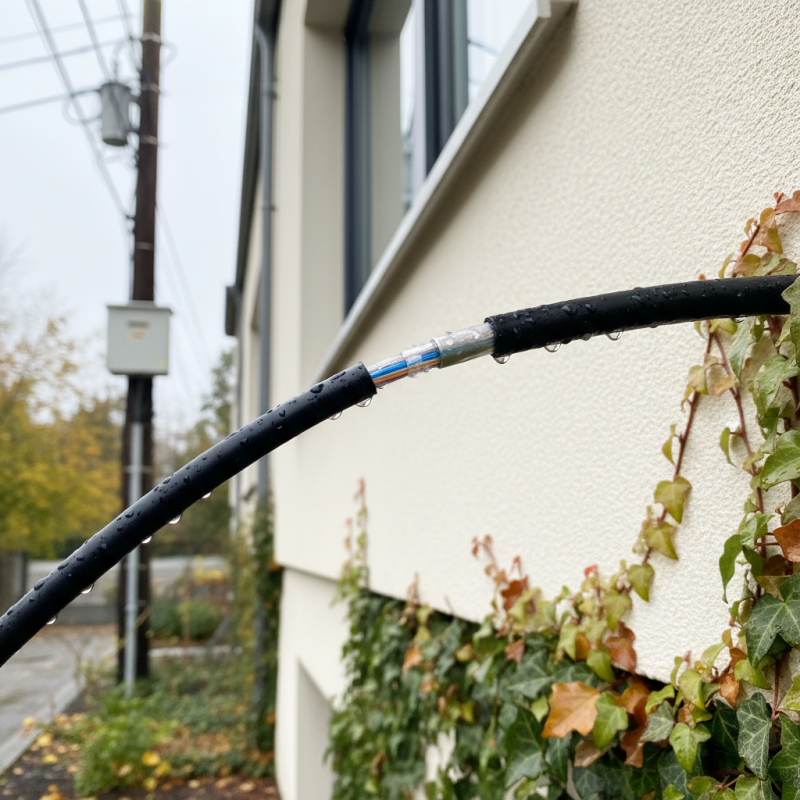
Drop cable plays a critical role in telecommunications networks.
These cables are designed for last-mile connectivity, linking the main network to individual users. They are typically lightweight, flexible, and easy to install. This makes them ideal for urban environments where space is limited. Their design often allows for easy routing around obstacles.
In terms of performance, drop cables can significantly enhance network reliability.
They minimize signal loss while maintaining high data transfer rates. This is crucial for applications that demand fast internet speeds, such as streaming and online gaming. However, their fragility can be a downside. Improper handling or installation can lead to physical damage, which impacts service quality.
The deployment of drop cables requires thoughtful planning and execution. Teams must ensure each installation meets safety standards. Poor installation practices can lead to network outages. It's essential to strike a balance between efficiency and careful implementation. Attention to detail here can prevent larger issues down the road.
Drop cables are vital in modern networks, providing a direct connection between the main distribution line and end-user devices. Understanding their components and structure helps to appreciate their importance. Typically, drop cables consist of multiple strands of fiber or copper, encased in a protective sheath. This sheath is designed to withstand environmental stress, such as temperature changes and moisture. Fiber drop cables, in particular, carry high-speed data efficiently across long distances.
The structure of drop cables also involves connectors at each end. These connectors ensure quick and reliable connections to devices like routers or switches. Not all connections are perfect, though. Improper installation can lead to attenuation or signal loss. Additionally, the choice of materials can affect the durability of the drop cable. Using subpar materials might yield temporary benefits but can result in higher long-term costs due to replacements or repairs.
High-quality drop cables are essential for minimizing downtime and maintaining a stable network. Regular testing of these components is necessary to ensure optimal performance. While some installations may appear straightforward, hidden factors can complicate efficiency. Regular maintenance and awareness of potential issues contribute to a more robust network infrastructure.
This chart illustrates the various benefits of using drop cables in network setups, rated from 1 to 10. The benefits evaluated include cost efficiency, ease of installation, signal quality, flexibility, and durability.
Drop cables play a crucial role in high-speed internet delivery. These cables connect the main network to individual homes or businesses. They are usually lightweight and easy to install. This simplicity reduces the installation time and effort required. Many users benefit immensely as these cables support high bandwidth.
One major advantage of drop cables is signal integrity. Unlike traditional cables, drop cables minimize interference. This leads to faster and more reliable internet connections. They can handle increased data loads efficiently. However, the quality of drop cables varies. Some may not meet specific standards, leading to performance issues.
Economically, drop cables are appealing. They can lower installation costs, especially in densely populated areas. However, improper installation can negate these savings. Users must ensure technicians are trained and knowledgeable. This expertise can prevent future problems and enhance overall network performance.
| Dimension | Details |
|---|---|
| Definition | Drop cables are short length cables that connect the main fiber optic line to the end user installations. |
| Speed | Supports high-speed internet delivery, enabling data transfer rates up to 10 Gbps. |
| Structure | Typically consists of a single or dual fiber design that is lightweight and flexible. |
| Installation | Easy to install, with minimal disruption to existing networks and environments. |
| Durability | Resistant to environmental factors, making them suitable for both indoor and outdoor installations. |
| Applications | Used in residential, commercial, and industrial applications for broadband access. |
| Cost-effectiveness | Lower overall installation and operational costs compared to traditional copper cable solutions. |
Drop cables are essential components in network connections, linking the main line to individual endpoints. Understanding the two primary types—fiber and copper—can significantly impact performance.
Fiber drop cables are known for their high bandwidth and long-distance capabilities. They transmit data using light, making them ideal for environments that require speedy data transfer and minimal signal loss. This is crucial for modern applications like streaming, gaming, and extensive data centers. However, fiber cables can be more fragile and require careful handling during installation. They may also involve higher costs upfront.
On the other hand, copper drop cables are easier to install and maintain. They are more robust, making them suitable for short-distance applications. Copper cables are prevalent in residential settings and small businesses due to their cost-effectiveness. Yet, their speed and distance limitations can be a drawback. Users often face a trade-off between cost and performance. Evaluating these factors is essential to meet specific network needs.
Drop cables have become essential in modern network infrastructures. According to a report by the Fiber Optic Association, the use of drop cables in residential and business applications has surged by 30% over the past two years. This increase highlights the importance of efficient data transmission in our digitally-driven environment. With demand for high-speed internet growing, drop cables have proven to deliver reliable connectivity.
Industry statistics indicate that networks using drop cable technology can achieve an average of 95% uptime. This reliability is crucial for businesses that depend on constant internet access. Furthermore, the National Telecommunications and Information Administration reported that networks utilizing drop cables showed a 40% improvement in data transfer speeds compared to traditional wiring methods. However, some challenges still exist. Installers occasionally report difficulties in optimizing drop cable runs, which may lead to signal degradation. Continuous training and experience in cable management play a key role in overcoming these hurdles.
In addition, a survey by the International Telecommunication Union found that over 60% of network professionals acknowledge the need for improved skills in drop cable handling. This reveals an area for growth within the industry. Ensuring top-notch network performance requires not only the right technology but also a knowledgeable workforce. Investing in better training will help future-proof networks against evolving demands.