
China Top Types of Amphenol Plugs for Global Buyers?
Choosing the right amphenol plugs is rarely a simple catalog exercise. Global buyers must match connector design with voltage, current, signal type, environmental exposure, and installation space. A plug used inside a factory control cabinet may fail outdoors without suitable sealing. A compact circular connector may suit sensor wiring, while a rugged rectangular connector may better support dense industrial systems.
This guide examines major Amphenol plug types for international purchasing teams. It considers circular connectors, rectangular connectors, automotive solutions, industrial Ethernet options, and high-reliability designs for demanding equipment. Each category offers different contact layouts, locking methods, housing materials, and protection ratings. These details affect assembly time, maintenance, and long-term performance. Small differences matter.
In practical sourcing work, buyers should verify the exact part number, mating connector, terminal arrangement, cable size, and operating temperature. Product photos are not enough. Datasheets, technical drawings, and manufacturer or authorized distributor records provide stronger evidence. Regional certification requirements may also influence the final selection, especially for machinery, transportation, and control equipment.
There is no universal best plug.
That point is easy to overlook. Some buyers focus on unit price and later face compatibility problems, delayed replacements, or expensive redesigns. A better evaluation compares total ownership cost, availability, technical support, and application risk. Even experienced teams can miss a detail, such as keying direction or contact plating. Careful verification remains essential before ordering samples or approving production quantities.
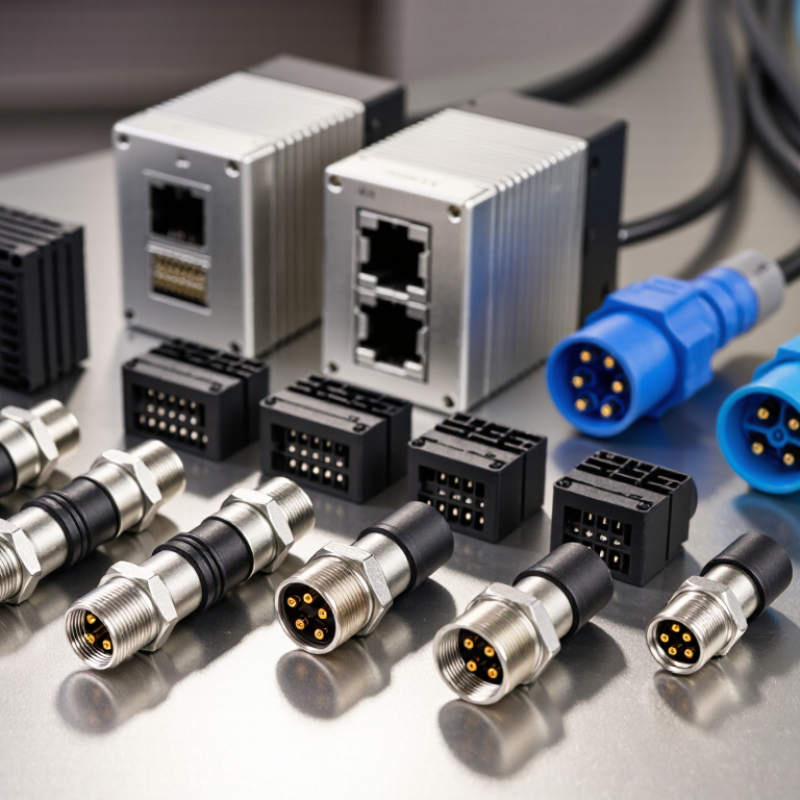
Table of Contents
[Hide]
What Are Amphenol Plugs and Why Are They Made in China?
Industrial buyers often use “Amphenol plugs” to describe rugged electrical connectors, although the term is not perfectly standardized. These plugs join power, signal, or data circuits through metal contacts, insulating bodies, seals, and locking mechanisms. Circular versions commonly serve machinery, vehicles, sensors, and outdoor control cabinets. Rectangular types fit dense equipment panels. A 2023 report from Bishop & Associates valued the global connector industry at about US$84.5 billion, showing the scale behind these small components.
Why are many produced in China? The country combines precision molding, stamping, plating, cable assembly, and testing within a concentrated supply network. A buyer can source shells, terminals, gaskets, and packaging from nearby suppliers. That shortens production cycles and reduces transport between factories. China also offers experienced engineering teams and flexible tooling for low-volume customization. This matters when a plug needs a different keyway, contact count, or IP-rated seal.
Cost is not the only explanation. Reliable factories use dimensional gauges, salt-spray testing, contact-resistance checks, and traceable batch records. Look for compliance with relevant IEC requirements, documented materials, and samples tested under real vibration and temperature conditions. A low quotation can hide weaker plating or inconsistent crimping. That mistake is common. The 2024 International Trade Centre trade data also places China among the leading exporters of electrical connection equipment under HS 8536, a broad category that includes many connector products. Buyers should still audit each supplier; “Made in China” describes origin, not automatic quality.
China Top Types of Amphenol Plugs for Global Buyers? - What Are Amphenol Plugs and Why Are They Made in China?
Typical circular, rectangular, industrial, and radio-frequency plug categories commonly evaluated by global buyers
| Plug Type | Typical Contact or Circuit Range | Coupling and Locking Method | Typical Protection and Environmental Capability | Common Applications | Why China Production May Be Selected | Key Buyer Verification Points |
|---|---|---|---|---|---|---|
| MIL-DTL-38999-Style Circular Plug | 2–128 contacts Configuration depends on shell size, insert arrangement, and contact type. | Threaded or bayonet-style coupling depending on the series and design. | Designed for demanding vibration, shock, temperature, and moisture conditions. Sealed versions commonly target IP67 or higher when correctly mated. | Aerospace equipment, defense electronics, industrial controls, rail systems, and rugged communications. | Competitive machining and assembly capacity, established metal-plating supply chains, and flexible production for customized shell finishes and contact layouts. | Confirm standard compliance, contact material, plating thickness, operating temperature, mating-cycle rating, insulation resistance, and qualification-test reports. |
| MIL-DTL-26482-Style Bayonet Circular Plug | 3–61 contacts Available contact counts vary by shell size and insert arrangement. | Quick bayonet coupling with visual and tactile locking feedback. | Suitable for sealed equipment exposed to dust, water spray, vibration, and moderate mechanical stress. The final rating depends on the complete mated assembly. | Ground vehicles, instrumentation, industrial machinery, power control, and transportation systems. | Mature die-casting, turning, plating, molding, and cable-assembly capabilities can support medium-to-large production volumes. | Check shell material, corrosion resistance, keying options, backshell design, cable diameter range, sealing performance, and bayonet retention force. |
| Push-Pull Industrial Circular Plug | 2–24 contacts Some versions support signal, low-voltage power, or mixed-contact layouts. | Push-pull locking for fast installation where tools are undesirable. | Many industrial versions are available with IP65, IP67, or IP68 protection when properly assembled and mated. | Sensors, medical equipment, test instruments, factory automation, lighting systems, and portable equipment. | China offers broad access to precision plastic molding, automated contact insertion, cable overmolding, and high-volume assembly. | Verify insertion force, locking reliability, cable-flex performance, shielding continuity, contact resistance, and resistance to cleaning chemicals. |
| M12-Style Industrial Plug | 3–17 contacts Common arrangements include 3-, 4-, 5-, 8-, and 12-contact versions. | Threaded coupling, usually with a screw-locking nut and defined keying. | Commonly specified for IP67 or IP68 applications, with optional shielding and resistance to oil, coolant, dust, and vibration. | Proximity sensors, machine vision, industrial Ethernet, programmable automation, robotics, and process-control equipment. | High-volume manufacturing, standardized tooling, automated testing, and extensive availability of cable, molding, and metal-component suppliers. | Confirm pin assignment, coding, data-transmission category, shielding method, cable jacket material, tightening torque, and compatibility with the target equipment. |
| Heavy-Duty Rectangular Plug | 4–128 contacts Modular designs may combine signal, power, pneumatic, or data inserts. | Lever, latch, or screw-locking mechanisms depending on housing design. | Commonly used with protective hoods and housings rated around IP65 to IP69K, depending on the complete system. | Factory automation, motor control, machine tools, rail equipment, robotics, and industrial power distribution. | Local availability of aluminum die casting, thermoplastic molding, surface treatment, stamped contacts, and modular assembly services. | Check current rating, creepage and clearance distance, housing material, cable-entry size, locking strength, flame rating, and EMC shielding performance. |
| RF Coaxial Plug | 1 coaxial circuit Multi-position versions can combine coaxial contacts with low-frequency signal contacts. | Threaded, bayonet, snap-on, or push-on coupling depending on the RF interface. | Environmental sealing varies widely. Outdoor assemblies may require IP-rated backshells, gaskets, and corrosion-resistant materials. | Antennas, wireless communication, radar, test equipment, broadcasting, navigation, and high-frequency instrumentation. | Precision turning, gold or nickel plating, dielectric molding, and RF test laboratories are widely available for both standard and customized assemblies. | Verify impedance, operating-frequency range, insertion loss, return loss or VSWR, shielding effectiveness, dielectric material, and mating-interface dimensions. |
| Circular Power Plug | 2–12 contacts Current capacity may range from low-voltage signal levels to several tens of amperes, depending on contact size and thermal design. | Threaded, bayonet, push-lock, or latch-based coupling. | Indoor and outdoor versions are available. Sealed designs may offer IP65–IP68 protection when cable termination and mating are correctly completed. | Battery systems, LED equipment, industrial drives, automation cabinets, renewable-energy equipment, and mobile machinery. | Cost-effective copper-alloy stamping, terminal plating, injection molding, cable assembly, and load testing support scalable production. | Confirm rated voltage and current, temperature rise, wire gauge, derating curve, touch protection, short-circuit requirements, and dielectric withstand voltage. |
| Miniature Circular Plug | 2–12 contacts Intended for compact signal, sensor, control, and low-power applications. | Threaded, snap-in, or push-pull coupling depending on the design. | Protection levels commonly range from unsealed indoor designs to IP67 versions for field equipment. | Measurement devices, medical instruments, audio systems, compact sensors, control panels, and portable electronics. | Precision micro-machining, small-part molding, automated soldering, and flexible low-to-medium-volume customization are often available. | Check outer diameter, pin spacing, contact resistance, bend radius, mating durability, cable retention, shielding, and compatibility with the installation space. |
Note: Contact counts, current ratings, ingress-protection levels, materials, and operating temperatures are typical category ranges rather than universal specifications. Buyers should validate the exact configuration, applicable standard, test documentation, and final assembled condition before purchase.
Related Posts
-
Best 10 Amphenol Pins for Your Next Project?
-
2026 Best Amphenol Plugs for Enhanced Connectivity Solutions?
-

Why Choose Amphenol Plugs for Your Connectivity Needs?
-

10 Tips for Sourcing Amphenol Products in Endicott NY?
-

Top Tips for Optimizing Amphenol Industrial Operations Efficiency?
-

Best Amphenol Plugs for Reliable Connectivity Solutions?