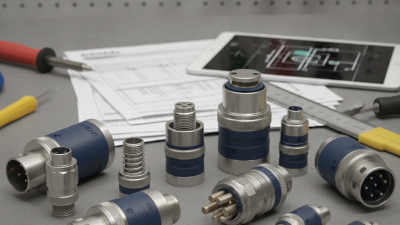
China Best Wire to Board Connector Manufacturers?

Choosing the right wire to board connector manufacturer requires more than comparing catalog prices. It demands practical knowledge of pitch, current capacity, contact plating, housing material, and assembly conditions. A connector may look small, yet it carries power, signals, vibration stress, and service expectations through every operating cycle.

Connector reliability specialist Robert Mroczkowski, author of the Electrical Connector Handbook, states, “The connector is often the least understood component in an electronic system.” That observation remains highly relevant. A strong manufacturer should provide stable tolerances, clear technical drawings, dependable samples, and traceable quality records. Look closely at crimp performance, terminal retention, mating cycles, and temperature ratings. Tiny details matter.

This guide examines China’s best wire to board connector manufacturers through an engineering and purchasing lens. It considers production experience, tooling capability, customization support, quality systems, and export reliability. Factory automation helps, but it does not replace process discipline. Neither does a polished website.

Some suppliers excel in high-volume consumer electronics. Others serve automotive, industrial controls, lighting, or medical equipment. Their strengths are not interchangeable. A low-cost part can become expensive after intermittent signals, difficult rework, or delayed certification appear.

No ranking is perfect. Supplier performance can change with materials, management, and customer requirements. That is why this article encourages sample testing, drawing verification, and direct technical discussions before approval. The best choice is not always the largest factory. It is the manufacturer that consistently matches the connector to the real application.

China Best Wire to Board Connector Manufacturers?

What Is a Wire-to-Board Connector?

What Is a Wire-to-Board Connector?

A wire-to-board connector joins individual wires to a printed circuit board. It usually includes a housing, crimp terminals, and a locking feature. The housing guides contact alignment. The terminal carries current through a metal contact point.

In practical harness work, pitch matters immediately. A 2.54 mm pitch leaves more room for inspection than a 1.27 mm design. Current rating depends on conductor size, contact resistance, temperature, and grouping. A connector rated at 5 A may perform differently inside a crowded enclosure. Small part. Big consequences.

Grand View Research reported that the global electrical connectors market reached about USD 84.9 billion in 2023. It also projected a 6.3% compound annual growth rate from 2024 to 2030. This growth reflects demand for compact control systems, vehicles, appliances, and industrial equipment. IEC 60512 test methods help engineers evaluate contact resistance, vibration, temperature rise, and mechanical durability.

Selection should begin with the application, not appearance. Check wire gauge, voltage, mating cycles, sealing needs, and board thickness. Confirm crimp pull force through production testing. A perfect drawing is not enough. I have seen installation errors caused by reversed housings and incomplete terminal insertion. That weakness deserves attention. Clear polarization, audible locking, and visual inspection windows can reduce those mistakes. Supplier audits should also examine plating consistency, mold stability, traceability, and lot-based test records.

Key Factors for Evaluating Chinese Connector Manufacturers

China Best Wire to Board Connector Manufacturers?

Key Factors for Evaluating Chinese Connector Manufacturers

Selecting a Chinese wire-to-board connector manufacturer requires more than comparing quotations. Check the factory’s process control, testing records, and engineering response. Ask for material certificates, dimensional reports, and samples from normal production batches. Housing materials should match the required temperature, flame-retardant, and insulation specifications. Confirm terminal plating thickness, contact resistance, current capacity, and mating-cycle performance. Small pitch connectors need careful control of warpage and terminal alignment. A useful sample test includes crimp pull force, insertion force, vibration, and temperature cycling. Do not rely on a polished sample alone.

Production consistency matters more than impressive prototypes. Review incoming inspection, mold maintenance, automated assembly, and lot traceability. The supplier should identify materials, tooling changes, operators, and inspection results by batch. Request clear evidence for applicable quality and environmental requirements. An on-site audit, video inspection, or independent laboratory report can reveal weak controls. I once focused too heavily on unit price. That was a mistake. Later costs appeared through unstable crimping and repeated sorting. Ask how the manufacturer handles complaints, corrective actions, and engineering changes. Response speed matters. So does technical honesty. A capable supplier should explain what it cannot guarantee, rather than promise every feature without qualification.

Leading China-Based Wire-to-Board Connector Manufacturers

China-based wire-to-board connector manufacturers are gaining attention as electronics production expands across vehicles, controls, appliances, and compact devices. Grand View Research estimated the global electrical connectors market at over USD 76 billion in 2023, with continued growth through 2030. This demand rewards suppliers that can control stamping, plating, molding, and assembly under one quality system.

Leading manufacturers usually offer pitch options from 0.8 mm upward, automated insertion, and custom housings for limited board space. Their engineering teams should provide terminal retention results, crimp pull-force records, mating-cycle data, and insulation resistance tests. IPC standards support consistent workmanship, but certification alone is not enough.

Factory experience matters.

Ask for process capability data, not only sample photographs. On-site audits can reveal bent pins, uneven plating, or weak reel packaging.

A reliable supplier should also explain material traceability and change-control procedures. Many Chinese factories support rapid tooling and flexible minimum order quantities, which helps during prototype development. However, low pricing can hide thinner plating or unstable dimensional control. That assumption is risky. I would compare three production lots before approval, measuring contact resistance and coplanarity under the same conditions. Industry reports from Mordor Intelligence also identify automotive electronics and consumer devices as major connector growth areas, increasing pressure for vibration resistance and dependable high-volume delivery. Some product pages still overstate performance. Independent validation remains necessary.

Manufacturing Capabilities and Quality Control Standards

China’s best wire-to-board connector manufacturers show capability through controlled production, not attractive catalog photos. Fortune Business Insights valued the global electrical connectors market at approximately USD 82 billion in 2023. This scale increases pressure on traceability, repeatability, and delivery performance.

A capable factory should run automated stamping, injection molding, plating, and assembly lines. Gold or tin plating thickness must be measured, not assumed. In-process cameras can detect bent terminals, incomplete locking, and housing flash. Statistical process control should monitor insertion force, contact resistance, and dimensional variation. IPC/WHMA-A-620 provides recognized workmanship guidance for cable and wire assemblies. ISO 9001 certification also supports documented corrective actions and batch traceability.

Quality testing should include thermal cycling, humidity exposure, vibration, salt spray, and repeated mating tests. A reliable supplier records lot numbers from resin pellets to packed connectors. It should also provide inspection reports, material declarations, and sample retention. The IATF 16949 framework is useful when connectors serve automotive applications, especially for failure analysis and change control. Yet certification alone proves little. Auditors should inspect actual production records, not only framed certificates.

Some factories still rely too heavily on final inspection. That approach can miss gradual mold wear or plating drift. A better process checks critical dimensions during every shift. It is less dramatic, but more dependable. Even strong manufacturers may struggle with sudden material substitutions or rushed engineering changes. Buyers should request first-article approval and verify performance under real load conditions. Small details matter.

China Best Wire to Board Connector Manufacturers? - Manufacturing Capabilities and Quality Control Standards

Evaluation Category Manufacturing Capability Quality Control Requirements Applicable Standard or Typical Target Recommended Verification Evidence
Product Design Product development for wire-to-board connectors used in power, signal, lighting, automotive, industrial, and consumer electronics applications. Design reviews should confirm terminal geometry, contact force, polarization, keying, locking features, creepage, clearance, and assembly tolerance. IEC 60512 test methods; application-specific requirements based on voltage, current, temperature, and vibration conditions. 2D drawings, 3D CAD files, tolerance analysis, design failure mode analysis, and prototype approval records.
Tooling and Mold Development Progressive stamping dies for terminals and precision injection molds for connector housings, covers, locks, and strain-relief components. Tool dimensions, cavity balance, wear condition, flash, short shots, deformation, and dimensional repeatability should be monitored. Dimensional controls should be defined on product drawings; critical dimensions commonly require tighter process control than non-functional cosmetic features. Tool maintenance records, first-article inspection reports, cavity identification, and dimensional inspection data.
Terminal Stamping High-speed stamping of copper-alloy terminals with controlled forming, piercing, bending, carrier design, and cut-off operations. Inspection should cover burr height, terminal pitch, contact area, bend angle, coplanarity, cracks, and retained material thickness. IEC 60512 mechanical and electrical test methods; burr and dimensional limits should be specified in the product drawing. In-process inspection records, vision inspection results, terminal cross-section analysis, and capability studies for critical dimensions.
Contact Material and Plating Use of copper alloys such as phosphor bronze or brass, with tin, nickel, or gold finishes selected according to electrical and environmental requirements. Plating thickness, adhesion, surface appearance, porosity, corrosion resistance, and contact resistance should be verified. ASTM B545 or equivalent methods for electrodeposited tin; ASTM B568 or X-ray fluorescence methods for coating thickness measurement; RoHS and REACH requirements where applicable. Material certificates, plating reports, XRF results, supplier certificates, and salt-spray or environmental test reports when specified.
Plastic Injection Molding Precision molding of housings using suitable engineering thermoplastics, including materials selected for insulation, temperature, flame resistance, and mechanical strength. Critical checks should include dimensions, warpage, flash, short shots, sink marks, color consistency, terminal retention, and locking performance. UL 94 flammability classification may be required for the selected resin; material performance must match the application temperature and electrical rating. Resin certificates, UL documentation where applicable, mold trial reports, dimensional records, and injection-process monitoring data.
Assembly Capability Semi-automatic or automated insertion of terminals into housings, connector polarization, secondary locking, cable preparation, and wire termination. Assembly controls should verify terminal insertion depth, retention force, connector orientation, secondary-lock engagement, and absence of damaged contacts. IPC/WHMA-A-620 is commonly used for cable and wire-harness workmanship requirements where applicable. Work instructions, operator qualification records, poka-yoke controls, retention-force test results, and end-of-line inspection records.
Electrical Performance Testing of low-level signal and power connector designs for continuity, insulation performance, current carrying capability, and contact resistance. Testing should include electrical continuity, dielectric withstand, insulation resistance, contact resistance, and temperature-rise evaluation where required. IEC 60512 electrical test methods; rated current and voltage must be established for the actual wire size, contact system, and operating environment. Electrical test reports, calibrated equipment records, test limits, sample sizes, and lot traceability.
Mechanical Performance Evaluation of mating systems, locking structures, wire retention, terminal retention, and connector durability. Mating and unmating force, terminal retention, wire pull-out force, vibration resistance, shock resistance, and durability should be tested. IEC 60512 mechanical test methods; test levels should reflect the connector's intended equipment and installation environment. Mechanical test reports, force-displacement curves, cycle-count records, fixture calibration, and failure analysis.
Environmental Reliability Validation for temperature cycling, humidity, corrosion, vibration, and other conditions associated with industrial, automotive, or outdoor applications. Samples should be inspected for cracking, corrosion, discoloration, contact resistance increase, insulation damage, and loss of locking function after testing. IEC 60512 environmental test methods; IEC 60068 series methods may be applied for temperature, humidity, vibration, and shock testing. Environmental test plans, pre- and post-test measurements, laboratory calibration certificates, and documented failure criteria.
Dimensional Inspection Use of optical measuring systems, coordinate measuring machines, pin gauges, gauges, and automated vision inspection for critical features. Inspection should cover pitch, housing dimensions, terminal position, coplanarity, keying, mating interface, and mounting features. ISO 286 fits and tolerances may support dimensional specification; inspection methods should be defined in control plans. Inspection reports, gauge calibration records, measurement-system analysis, and statistical process-control charts.
Process Management Controlled production flow from incoming material inspection through stamping, plating, molding, assembly, testing, packaging, and shipment. A documented quality management system should control nonconforming products, corrective actions, change management, process audits, and supplier performance. ISO 9001 is a widely recognized quality management system standard; IATF 16949 may be required for automotive supply chains. Valid certificates, internal audit records, corrective-action reports, process flow charts, control plans, and production records.
Material Compliance Management of compliant metals, plastics, plating chemicals, lubricants, packaging materials, and restricted substances. The manufacturer should control hazardous substances and maintain up-to-date declarations for materials supplied to customers. EU RoHS Directive and REACH requirements may apply depending on the destination market and product application. RoHS declarations, REACH statements, laboratory screening reports, material safety data, and supplier compliance documentation.
Traceability Lot-level tracking of raw materials, terminals, plating batches, molding lots, assembly dates, operators, equipment, and inspection results. Traceability should allow affected production lots to be identified quickly after a complaint, material change, process deviation, or test failure. Traceability depth should be defined by customer requirements and product risk; automotive programs commonly require stronger lot control. Lot codes, barcode records, ERP or MES history, batch certificates, inspection logs, and shipment traceability reports.
Final Inspection and Packaging Final inspection, quantity verification, protective packaging, moisture and contamination control, labeling, and shipment preparation. Final checks should confirm appearance, dimensions, terminal arrangement, mating condition, quantity, labeling, and packaging integrity. Packaging and labeling requirements should be agreed with the customer; ESD controls may be required for sensitive electronic assemblies. Final inspection reports, approved packaging specifications, packing lists, product labels, and release authorization records.
Supplier Selection Indicator Preference for manufacturers that can combine design support, tooling, stamping, plating control, molding, assembly, testing, and consistent volume production. The strongest candidates demonstrate stable process capability, transparent documentation, responsive corrective action, and repeatable product performance. Compare certification scope, product-specific test coverage, process capability, defect rates, lead time, minimum order quantity, and change-control procedures. Factory audit results, sample approval data, capability studies, customer-specific quality agreements, and verified production references.

How to Choose the Best Supplier for Your Application

China Best Wire to Board Connector Manufacturers?

How to Choose the Best Supplier for Your Application

Choosing a wire to board connector supplier requires more than comparing online prices. Define pitch, pin count, current rating, housing material, and cable size before requesting quotations. A 2.54 mm pitch may suit a control panel, while compact equipment may need a smaller design. Ask for drawings, tolerances, and complete electrical specifications.

Practical sourcing experience shows that samples reveal problems quickly. Check insertion force, terminal retention, locking strength, and fit with your actual PCB. Test several production samples, not only one carefully selected piece. Request material certificates and inspection records. A capable factory should explain its crimping process, mold controls, and traceability system clearly.

Factory communication matters. Confirm tooling ownership, minimum order quantities, lead times, packaging, and change notification procedures. Ask whether the supplier performs temperature cycling, vibration, salt spray, and contact resistance tests when your application requires them. Some suppliers provide impressive reports but explain little about test conditions. That deserves attention. A low quote can hide inconsistent terminals, weak inspection, or expensive tooling changes. I have learned that “best” often means dependable communication and repeatable quality, not the cheapest first order. Still, every supplier deserves verification through an audit, sample approval, and controlled pilot run.