How to Choose the Right M8 Connector for Your Needs?
Choosing an m8 connector is a small decision with real consequences. A loose fit beside a vibrating sensor can interrupt a line. The wrong cable can also complicate cleaning, installation, or replacement. Before comparing products, check the thread size, pin count, coding, cable type, and required ingress protection. These details matter more than a familiar brand name.
The International Federation of Robotics reported 4.28 million industrial robots operating worldwide in 2023, up 10% from 2022. That figure, published in World Robotics 2024, reflects the growing need for reliable connections in automated environments. IEC 61076-2-104 provides a technical reference for M8 circular connectors; IEC 60529 explains IP protection ratings. Neither standard, by itself, tells you which connector suits your machine. The application still decides.
A careful selection starts with the actual conditions: oil near the connector, repeated cable movement, limited mounting space, or washdown exposure. Then compare the manufacturer’s specifications against those conditions. Small details count. A connector may fit mechanically yet use the wrong pin assignment. One caveat: no source material was provided to verify a named M8 connector expert’s quotation, so I won’t invent one. A properly sourced expert comment can strengthen this introduction, but only when its wording and attribution are confirmed. This step is easy to overlook. It shouldn’t be.
Identify the Application and Operating Environment
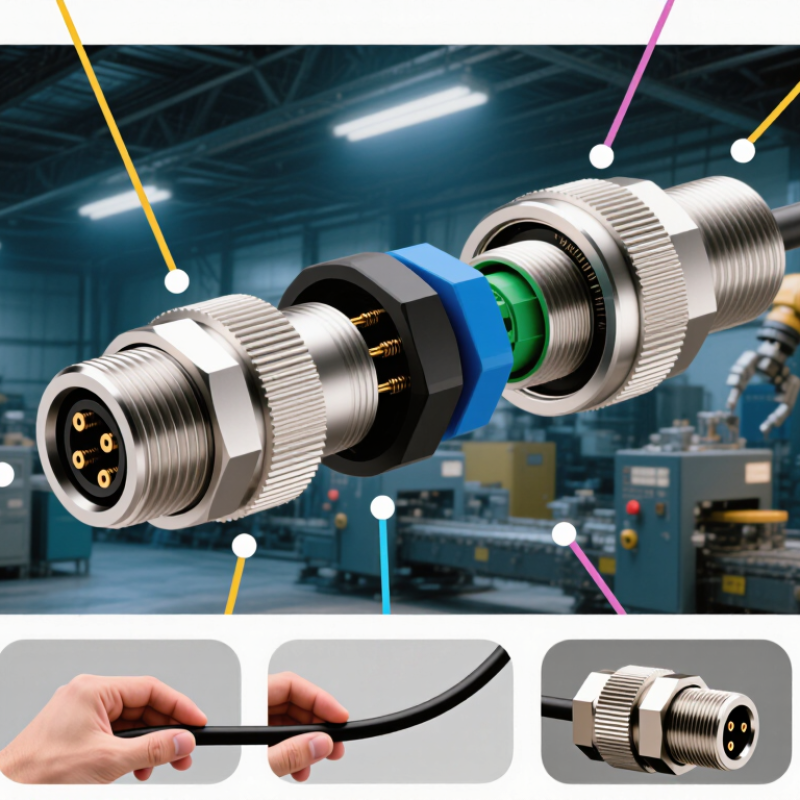
Before selecting an M8 connector, define what it will connect and how the equipment will move. A fixed photoelectric sensor on a machine frame has different needs from a tool that vibrates throughout each shift. Check the device’s pin count and wiring diagram, then confirm they match the cable and control system. A connector that fits mechanically can still be wired incorrectly.
Look closely at the operating environment. Is the connection exposed to dust, splashing water, oil, cleaning fluids, or repeated temperature changes? Check the manufacturer’s stated protection rating and temperature range against the actual conditions, rather than relying on appearance. Small details matter. A cable routed beside a warm motor may need different temperature tolerance from one inside a cool enclosure. Repeated bending also puts stress on the cable and connector exit, even when the mating connection is secure.
Consider installation and maintenance, too. Limited space may call for a compact, angled connection, while frequent sensor replacement can make hand access important. Vibration can loosen poorly secured connections, so assess the mounting method and cable support together. I have seen selection decisions focus on the connector alone; that can miss the strain placed on the whole assembly. If the environment varies between shifts, document those conditions and verify the specifications before ordering. A little uncertainty is worth investigating.
Determine Pin Count, Coding, and Electrical Requirements
Choosing an M8 connector starts with the signal layout, not the connector’s appearance. Count every required contact, including power, signal, shield, and spare lines. A four-pin version may suit a basic sensor, while an eight-pin version supports several signals in a compact cable.
Leave room for change.
Coding prevents incorrect mating when several connectors are installed nearby. Select a coding system that matches the equipment’s mechanical arrangement and cable routing. Check the key position, mating direction, and available clearance around the threaded coupling. In real installations, a connector can be technically correct but difficult to grip with gloves or tools. I once underestimated this detail, and service work became unnecessarily slow.
Electrical requirements need careful checking. Confirm rated voltage, current, contact resistance, insulation resistance, and temperature range from reliable technical documentation. Do not choose current capacity from a headline value alone. Cable size, ambient heat, and contact spacing can reduce practical performance. For fast data signals, review impedance, shielding, and transmission frequency. A connector carrying power may need different protection from one carrying a sensitive encoder signal.
Consider the environment too. Check the protection rating after mating, cable bending, vibration, oil exposure, and repeated connection cycles. Laboratory conditions can hide weaknesses. Testing a wired sample under expected load is more dependable than trusting a catalog table alone. I would also verify the pinout twice, because a small drawing error can damage connected equipment. Be cautious.
Choose the Connector Gender, Mounting Style, and Cable
Choose the connector gender by matching the M8 interface to the device drawing. Pin and socket layouts must align, and the keyway should face the correct direction. Do not rely on labels such as “plug” alone; naming conventions can vary. Small detail. Big consequence. A mismatch may prevent connection or damage exposed contacts during assembly.
Next, match the mounting style to the installation. A panel-mounted connector needs enough space behind the panel for its body, nut, and cable bend. A cable-mounted version may suit equipment that moves or needs quick replacement. Check thread dimensions and sealing details, too. An M8 connection is not automatically waterproof; protection depends on the connector, mating parts, and installation. I still double-check clearance on crowded panels, because a drawing can hide an awkward wrench angle.
Choose the cable for the actual job, not just its length. Confirm conductor count, wire size, jacket material, and flexibility. A cable that works on a fixed sensor may fatigue near a moving machine. Check temperature and chemical exposure against the cable specifications. For long or electrically noisy runs, consider whether shielding is needed, but do not assume it solves every interference problem. Leave room for a gentle bend. Tight bends are easy to overlook.
Confirm Compatibility, Standards, and Installation Requirements
Before ordering an M8 connector, match its electrical interface to the device, not just its thread.
IEC 61076-2-104 specifies dimensions and mating requirements for M8 circular connectors, but pin count and coding still matter. Check the sensor or controller drawing for pin assignments, voltage, current, and signal type. A four-pin plug may physically fit yet connect the wrong signals. That mistake is easy to miss.
Check the required ingress protection against the actual installation. IEC 60529 defines IP67 as dust-tight protection and temporary immersion testing at up to 1 metre for 30 minutes; it does not mean permanent underwater use. Inspect the complete connection, including the mated seal, cable jacket, and panel feed-through. Tiny gaps matter. For vibration or frequent washdown, verify the specified rating under those conditions, too. I still double-check the mating drawing.
Installation details can change the right choice. Measure clearance around the port, cable-bend space, and tool access before selecting a straight or angled body. Follow the manufacturer’s stated tightening method and torque; overtightening can damage threads or seals, while loose coupling can compromise sealing. Also confirm cable length, temperature range, and whether field-attachable termination is needed. IEC standards set useful baselines, but the equipment documentation determines whether a specific assembly is suitable.