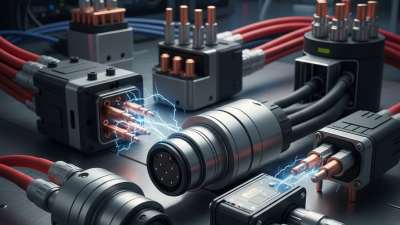
What Are the Top 10 High Power Connectors?

High power connectors are becoming critical as electric vehicles, battery storage, data centers, and industrial automation demand greater current density. Grand View Research valued the global electrical connectors market at approximately USD 84 billion in 2023. It also projects continued growth through 2030. MarketsandMarkets reports similar expansion, driven by electrification, renewable energy, and advanced computing. These figures describe the broader connector market, not only high power connectors. That distinction matters.

“Power density is only useful when reliability remains predictable,” says Scott Shadley, a senior technology executive at TE Connectivity. His observation reflects a practical engineering reality. A connector may carry hundreds of amperes, yet still fail through heat, vibration, corrosion, or poor mating force. Picture a busbar joint inside an electric vehicle. It faces constant temperature changes, mechanical shock, and limited installation space.

This guide examines the top 10 high power connectors through current rating, voltage capability, contact resistance, cooling, ingress protection, and service life. Manufacturer specifications provide a starting point. Independent testing provides stronger evidence. IEC 60512 testing methods can help assess electrical, mechanical, and environmental performance. However, published ratings are not always directly comparable. Different manufacturers use different temperature-rise limits and test conditions.

A ranking can never be perfect. Application context changes everything. The best connector for a battery pack may be unsuitable for a wind turbine or high-density server rack. Readers should verify derating curves, cable size, locking systems, and certification requirements before selection. Small details often decide whether a power connection remains stable—or becomes the hottest point in the system.
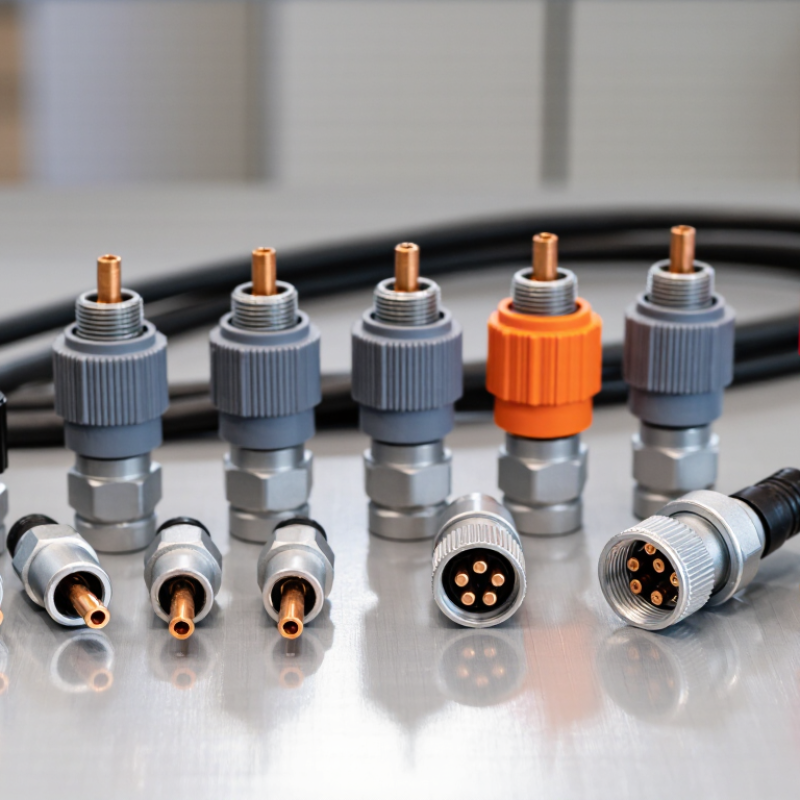
What Are the Top 10 High Power Connectors?

Definition and Function of High-Power Connectors

What Are the Top 10 High Power Connectors?

Definition and Function of High-Power Connectors

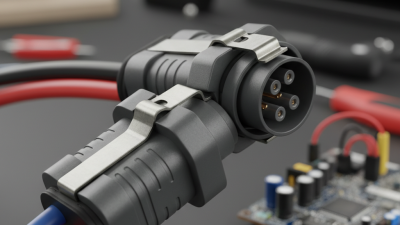
High-power connectors are engineered interfaces that transfer substantial electrical current safely between equipment, cables, batteries, and distribution systems. They combine conductive contacts, insulating materials, protective housings, and locking mechanisms. Unlike signal connectors, they must control heat, vibration, arcing, and accidental contact. Their function is simple but demanding: maintain a stable electrical path under real operating stress. A reliable connector should resist moisture, corrosion, mechanical shock, and repeated mating cycles. Small design details matter.

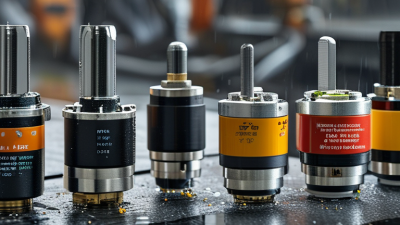
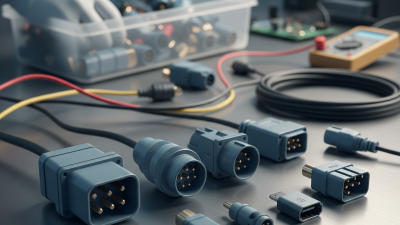
There is no universal top ten. The best choice depends on voltage, current, installation space, and environmental exposure. Common high-power options include circular, rectangular, modular, sealed, quick-disconnect, busbar, panel-mount, right-angle, blind-mate, and battery connectors. A sealed type may suit outdoor equipment, while a blind-mate design helps technicians connect heavy assemblies accurately. Designers should verify contact resistance, temperature rise, creepage distance, clearance, and touch protection. A printed current rating can mislead if airflow is poor or cables are undersized. The neatest choice is not always the safest.

Tips: Inspect for darkened contacts, loose locks, cracked insulation, or unusual warmth. Confirm torque values and cable size before energizing the system. Leave room for testing and maintenance. Practical checks often reveal problems that calculations miss.

Key Standards and Performance Criteria for Ranking Connectors

What Are the Top 10 High Power Connectors?

Ranking high power connectors requires more than comparing current ratings. In practical testing, the strongest designs balance current capacity, voltage clearance, thermal stability, and mechanical security. IEC 61984 helps assess connector safety and performance. IEC 60512 provides useful test methods for contact resistance, temperature rise, vibration, and durability. These standards create a reliable foundation for comparing ten connector categories.

The ranking should examine several measurable criteria. Continuous current matters more than a short laboratory peak. A connector carrying 300 amperes must control heat at the terminals and cable interface. Derating curves reveal performance inside crowded cabinets. Contact resistance should remain stable after repeated mating cycles. IP ratings under IEC 60529 show protection against dust and water. Creepage and clearance distances should match the working voltage and pollution level. They are easy to overlook.

Mechanical design also affects the ranking. Locking systems must resist vibration without making maintenance difficult. Materials should tolerate temperature cycling, moisture, and chemical exposure. Shielding and grounding deserve attention in systems with sensitive control electronics. Field experience often exposes weaknesses that datasheets miss. A connector may pass a brief overload test, yet loosen after months of vibration. That detail can change its position completely. My own ranking would therefore give equal weight to certified testing and realistic installation conditions. No list is fully objective. Technician access, cable size, and service frequency can alter the result.

What Are the Top 10 High Power Connectors? - Key Standards and Performance Criteria for Ranking Connectors

The ranking is based on a balanced evaluation of continuous current capability, voltage capability, contact protection, mechanical reliability, environmental resistance, safety standards, serviceability, and suitability for demanding power applications. Values are representative ranges for common configurations; actual performance depends on contact size, conductor cross-section, temperature rise, housing design, and installation conditions.

Rank Connector Family Typical Continuous Current Typical Rated Voltage Contact Arrangement Environmental Protection Typical Temperature Range Relevant Standards Primary Applications Performance Score
1 High-Voltage Interlock (HVIL) Power Connector 100–500 A 400–1,000 V DC 2–3 high-current contacts with auxiliary signal and interlock contacts Typically IP67 when mated; touch-safe HV shielding −40°C to +125°C IEC 60664-1, ISO 6469-3, IEC 60529, UN 38.3 where used in battery systems Electric vehicles, traction batteries, high-voltage energy storage, power electronics 9.8/10
2 Heavy-Duty Circular Power Connector 50–300 A per contact 300–1,000 V AC/DC 1–12 power contacts, often with auxiliary contacts IP65–IP69K depending on sealing and coupling design −55°C to +125°C IEC 60529, IEC 61984, IEC 60068 environmental tests Industrial machinery, mobile equipment, robotics, outdoor power distribution 9.5/10
3 Rectangular Heavy-Duty Industrial Connector 16–200 A per contact 250–1,000 V AC/DC Multiple power, protective-earth, and signal contacts in modular inserts Commonly IP65–IP69K when fully assembled −40°C to +125°C IEC 61984, IEC 60529, IEC 60068, EN 175301-801 Factory automation, control cabinets, production lines, rail and material handling 9.2/10
4 Single-Pole Cam-Lock Power Connector 200–700 A 600–1,000 V AC/DC Single power pole per connector; genderless or keyed systems are common Usually IP65 or higher when correctly mated; finger-safe designs available −40°C to +105°C IEC 61984, IEC 60529, IEC 60309 application guidance Temporary power, generators, entertainment systems, battery test equipment 9.0/10
5 Busbar and Laminated-Busbar Power Connector 200–1,500 A 600–1,500 V DC Bolted or clamped interface with one or more high-current paths Protection depends on enclosure; sealed versions can reach IP65–IP67 −40°C to +150°C, depending on insulation system IEC 61439, IEC 60664-1, IEC 60529, UL 508A design practices Switchgear, data-center power systems, inverters, battery racks, DC distribution 8.9/10
6 High-Current Battery Terminal Connector 100–600 A 60–1,000 V DC 2–6 high-current contacts, frequently with auxiliary or sensing terminals IP54–IP67 depending on housing, venting, and sealing design −40°C to +125°C IEC 62619, IEC 60529, IEC 60664-1, ISO 6469-3 where applicable Industrial batteries, energy storage systems, forklifts, mobile power units 8.8/10
7 Railway Power Connector 50–400 A 750–3,000 V DC Single or multi-contact power arrangement with grounding and signal options IP65–IP68; designed for vibration, shock, dust, and moisture exposure −50°C to +100°C EN 50124-1, EN 50155, EN 61373, IEC 60529 Rail vehicles, traction systems, signaling equipment, wayside power systems 8.7/10
8 IEC 60309 Industrial Plug and Socket 16–125 A in common configurations 200–690 V AC 2P+PE, 3P+PE, or 3P+N+PE arrangements with keyed clock positions IP44–IP67, with higher protection available in specialized designs −25°C to +40°C standard; wider ranges are available IEC 60309-1, IEC 60309-2, IEC 60529 Construction sites, industrial equipment, workshops, shore power, temporary distribution 8.5/10
9 High-Power Coaxial or RF Power Connector 10–200 A RF-equivalent thermal load, application dependent 1–20 kV peak, frequency and geometry dependent Single center conductor with coaxial return path and shielding Typically IP54–IP67 with suitable sealing hardware −55°C to +125°C IEC 61169 series, IEC 60529, IEC 60068 RF transmitters, broadcast systems, radar, industrial heating, test equipment 8.3/10
10 High-Power Rectifier and Inverter Connector 100–800 A 600–1,500 V DC Bolted, press-fit, or pluggable power contacts with optional sensing terminals IP20–IP67 depending on cabinet, module, and cooling requirements −40°C to +125°C IEC 62477-1, IEC 60664-1, IEC 60529, IEC 61800-5-1 Industrial drives, solar inverters, UPS systems, charging infrastructure 8.1/10

Note: Current ratings are not interchangeable across connector families. Cable size, conductor material, contact resistance, ambient temperature, duty cycle, cooling method, creepage distance, clearance, and derating requirements must be verified for the specific application.

The Top 10 High-Power Connector Types

High-power connectors are chosen for current, voltage, heat, and mechanical stress. The top 10 high-power connector types cover different installation needs.

Circular power connectors resist vibration and support sealed designs.

Rectangular heavy-duty connectors offer dense contact layouts and strong panel mounting.

Busbar connectors provide short, low-resistance paths in distribution equipment.

Quick-disconnect connectors reduce maintenance time during equipment servicing.

Blade connectors handle high current with simple, accessible contact surfaces.

Cable lug connectors attach firmly to cables and busbars.

Bolted stud connectors deliver reliable pressure when correctly tightened.

Battery connectors support repeated mating in energy storage and mobile equipment.

Board-to-board power connectors save space inside compact electronic systems.

Hybrid power-and-signal connectors carry both energy and control signals through one housing.

That makes ten types.

Selection should include continuous current, peak current, contact resistance, creepage distance, and insulation temperature. Do not ignore cable flexibility. A rigid cable can slowly damage the connector under vibration.

Check sealing performance, keying, touch protection, and mating cycles before approval.

Torque matters. Too little creates heat; too much can deform the housing.

Field inspections should look for discoloration, looseness, cracked insulation, and unusual odor. A connector may pass a bench test but fail after months of dust and thermal cycling. This is where specifications alone feel incomplete. Real installation conditions deserve equal attention.

Typical Applications Across Industrial and Energy Systems

What Are the Top 10 High Power Connectors?

Typical Applications Across Industrial and Energy Systems

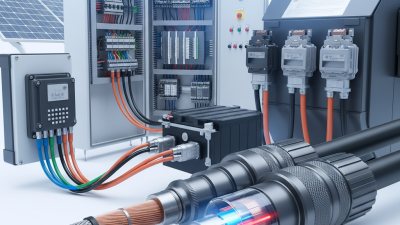
High power connectors support motors, battery racks, charging equipment, and renewable-energy cabinets. The ten most useful families include high-voltage circular, rectangular, busbar, panel-mount, cable-to-cable, board-to-board, blind-mate, feedthrough, quick-lock, and liquid-cooled connectors. Each design solves a different installation problem.

In factories, rectangular and busbar connectors handle motor drives, inverters, and distribution panels. Blind-mate versions help technicians connect sealed modules inside crowded cabinets. Quick-lock designs suit test equipment and mobile generators. Feedthrough connectors maintain power across enclosure walls while protecting insulation and shielding.

Renewable systems demand greater connector reliability. The International Energy Agency reported nearly 510 gigawatts of renewable capacity additions in 2023. Solar inverters, battery containers, and wind converters therefore need connectors that resist vibration, moisture, and thermal cycling. A minor contact-resistance increase can create dangerous heat during continuous operation.

Energy storage uses high-voltage circular and liquid-cooled connectors for battery strings and power-conversion systems. The IEA’s Global EV Outlook 2024 recorded more than 14 million electric car sales in 2023, increasing pressure on charging infrastructure. Industrial experience shows that connector selection cannot rely on current ratings alone. Cable bend radius, touch protection, locking force, and service access matter equally. Real installations are rarely as clean as drawings. Some engineering teams still underestimate condensation and repeated mating cycles. That oversight deserves closer review.

Top 10 High Power Connector Types

Typical continuous current capacity across industrial, transportation, and energy systems. Values are representative upper-range figures for commonly specified connector families; actual ratings depend on voltage, temperature, conductor size, enclosure, and installation conditions.

Busbar interfaces and single-pole power connectors support the highest currents, while energy-storage, electric-vehicle, wind-power, and heavy-duty industrial connectors balance high capacity with safety, modularity, and serviceability.

Selection, Installation, and Safety Considerations

Selecting among the top 10 high power connectors requires more than checking current ratings. Match continuous current, voltage, mating cycles, temperature, and cable size. A connector rated for 500 amps may still overheat when airflow is poor or contacts are worn. The IEA’s Global EV Outlook 2025 reports that electric car sales exceeded 17 million in 2024. This growth increases demand for reliable high power connection systems. IEC 60512 testing should guide evaluations of contact resistance, vibration, temperature rise, and durability.

Installation quality matters just as much. Clean cable preparation prevents uneven resistance at the terminal. Use calibrated torque tools, then record each connection. Do not rely on hand-tightening. During commissioning, infrared scanning can reveal abnormal heating before insulation damage appears. NFPA 70E emphasizes electrically safe work practices, including isolation, verification, and suitable protective equipment. Yet real sites can be untidy. A perfect design may fail beside dust, moisture, or repeated cable movement. IP protection should match the enclosure environment, not the product brochure alone.

Tips: Leave enough bend radius near the connector. Inspect seals after every service cycle. Mark phase and polarity clearly. Retest after vibration or thermal cycling. I sometimes see teams skip the final resistance check, assuming a successful power-up proves safety. It does not. Use IEC test records, manufacturer specifications, and site measurements together. That evidence makes connector selection more defensible and easier to audit.