What Are Top Amphenol Circular Connector Types in 2026?
Choosing the right connector in 2026 requires more than comparing catalogs. Amphenol circular connectors serve aerospace, transportation, industrial automation, energy, medical equipment, and defense applications. Each environment demands a different balance of sealing, contact density, vibration resistance, and serviceability.
R. Adam Norwitt, former Amphenol President and CEO, once stated, “Our customers are looking for partners who can help them solve their most difficult challenges.” That idea guides this overview. Connector selection is not only a part-number exercise. It is a practical engineering decision made beside control cabinets, aircraft harnesses, robotic arms, and outdoor power systems.
This article examines leading Amphenol circular connector families expected to remain important in 2026. The discussion includes MIL-DTL-38999, MIL-DTL-26482, PT/451, AT, AC, ePower, and C091 solutions. Their differences can appear small. A shell finish, keyway, backshell, or sealing class may decide whether a connection survives years of vibration and moisture.
Some choices are obvious. Others are not.
A rugged connector may add weight, tooling requirements, and installation time. A compact design may save space but reduce flexibility during maintenance. Product popularity also varies by region, certification needs, and supply conditions. Therefore, “top” should not mean universally best. It should mean technically suitable, available, and dependable for the intended application.
The comparisons that follow combine manufacturer specifications with field-oriented considerations. Still, specifications cannot predict every installation problem. Cable routing, operator handling, mating cycles, and neglected inspection can change real performance. That limitation deserves attention.
Amphenol Circular Connectors: Definition, Structure, and Core Functions
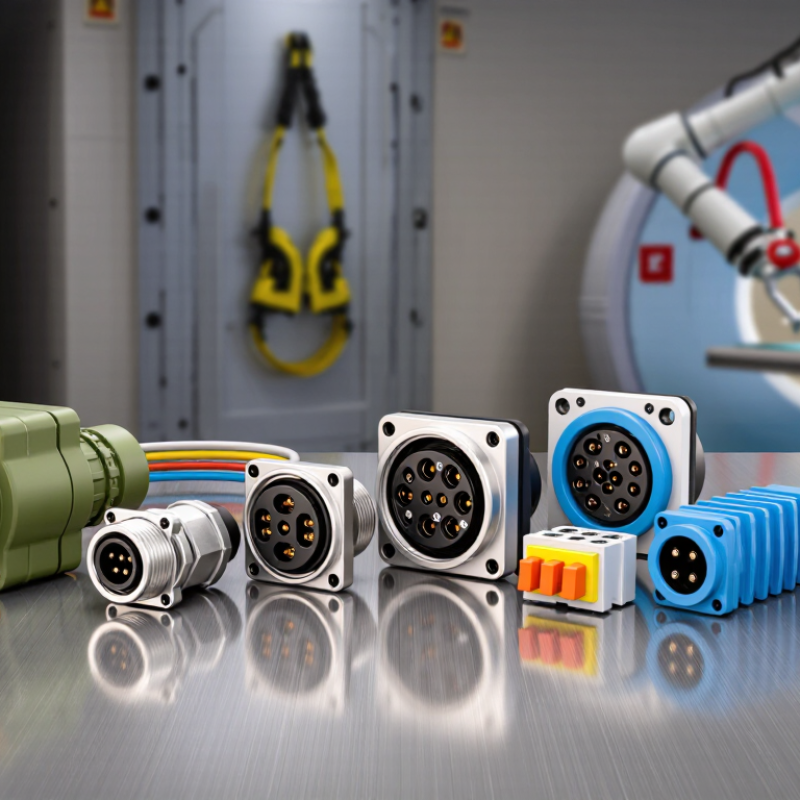
Circular connectors are engineered interfaces that join power, signal, or data circuits in demanding equipment. Their round shell supports alignment, sealing, and repeated mating. A typical connector contains contacts, an insulating insert, a metal or polymer housing, and a coupling system. Contacts carry current. The insert separates circuits. The shell protects against impact, moisture, vibration, and electromagnetic interference. Threaded, bayonet, and push-pull couplings suit different installation speeds and security needs. According to the 2024 Circular Connectors Market report by MarketsandMarkets, the sector is projected to grow from roughly USD 6.5 billion in 2023 to over USD 9 billion by 2028. That growth reflects expanding demand in automation, transportation, medical equipment, and energy systems.
Tips:
Check contact count, current rating, voltage rating, IP protection, and cable diameter together. A higher pin count can reduce spacing and complicate assembly. Field experience shows that sealing failures often begin with poor cable preparation, not the connector body. Do not select by appearance alone. Verify mating cycles and temperature limits.
Core functions extend beyond simple connection. A reliable circular connector maintains low contact resistance during vibration and thermal changes. Shielded versions reduce unwanted electrical noise. Keyed structures prevent incorrect mating, while strain relief protects conductors near the entry point. Some specifications appear impressive but remain incomplete without testing conditions. For example, an IP rating applies only when the connector is correctly mated and sealed. This detail is easy to overlook.
How to Classify Amphenol Circular Connector Types
Classifying Circular Connector Types for 2026
Circular connector selection should begin with structure, not appearance.
In engineering practice, five categories matter: interface, contact layout, mounting method, environmental rating, and signal purpose. Threaded, bayonet, push-pull, and snap-lock interfaces suit different installation speeds. A threaded coupling can resist vibration, while a push-pull design saves space during maintenance. The choice is rarely universal.
Contact arrangement offers another useful filter.
Power connectors usually use larger contacts and thicker insulation. Signal connectors often require high pin density and controlled shielding. Hybrid versions combine power, data, and control contacts in one housing.
Standards in the IEC 61076-2 series help engineers compare dimensions and locking systems. However, product descriptions do not always use identical terminology. Check the technical drawing carefully.
Environmental classification becomes critical in factories, transport equipment, and outdoor cabinets.
Look for IP ratings, operating temperature, corrosion resistance, and cable-entry limits. A market study by MarketsandMarkets estimated the circular connectors market could grow from about USD 5.4 billion in 2023 to USD 7.5 billion by 2028. Mordor Intelligence also projected annual growth above 6% through 2029. These figures show demand, not guaranteed reliability. A connector that survives a laboratory test may still fail after repeated bending, dirty gloves, or poor torque control. Classification should therefore include real installation habits. That step is often missed.
Key Amphenol Circular Connector Families in 2026
In 2026, circular connector selection centers on several proven families. Each serves a different installation problem.
The MIL-DTL-38999 family suits aerospace, defense, and industrial systems needing high contact density. Its threaded coupling resists vibration and accidental separation. Shell options support harsh temperature and moisture conditions. Technicians often value its clear keying choices during maintenance. However, it can increase assembly time and tooling costs.
The MIL-DTL-26482 family remains practical for compact equipment. Bayonet coupling enables fast mating in restricted spaces. It works well in control units, transport systems, and field instruments. Push-pull industrial families provide quick access without twisting the coupling ring. This matters beside machinery or inside crowded cabinets. They feel efficient.
M12-style families support sensors, automation networks, and compact power circuits. Their small housings save space around robotic equipment. Shielded versions can reduce signal interference when installation practices are sound. High-power circular families handle larger currents for motors, battery systems, and distribution panels. Contact size, thermal rise, and cable flexibility require careful checking.
A common mistake is choosing by shell size alone. Contact plating, sealing, coding, and service access matter just as much. I have seen oversized connectors create unnecessary weight and routing problems. I have also seen compact designs leave too little room for gloved technicians. Datasheets help, but real installation trials reveal weaknesses. No family is perfect.
What Are Top Amphenol Circular Connector Types in 2026?
Key circular connector families are commonly selected by contact capacity, environmental protection, and application requirements. The chart compares representative maximum contact counts defined by widely used connector standards, without using company or brand data.
MIL-DTL-38999 and EN 3645 support high-density aerospace and defense wiring. MIL-DTL-5015 is suited to rugged, general-purpose power and control connections, while M12 and M8 connectors are commonly used for industrial automation, sensors, and field devices.
Comparing Connector Performance, Materials, and Environmental Ratings
What Are Top Circular Connector Types in 2026?
Circular connector selection now depends on performance, materials, and environmental ratings. Threaded types suit vibration-heavy machinery and outdoor equipment. Bayonet types lock faster during field maintenance. Push-pull versions reduce installation time in compact medical and automation systems. Bishop & Associates estimated the global connector market at approximately $84.5 billion in 2023, showing strong demand across transportation, industrial, and communication equipment.
Contact materials affect current capacity and service life. Copper alloys with nickel or gold plating resist oxidation and maintain stable signals. Aluminum shells reduce weight, while stainless steel improves impact and corrosion resistance. However, lighter is not always better. A thin shell may deform under repeated coupling. IEC 60529 ratings also deserve careful attention. IP67 supports temporary immersion, while IP68 depends on the specified test conditions. These ratings are not interchangeable.
Tips:
Check the real installation environment, not only the catalog headline. Confirm operating temperature, cable bend radius, mating cycles, and salt-spray results. The IEC 60068 environmental testing series provides useful methods for vibration, humidity, and thermal evaluation. I would also request test records from suppliers. Marketing claims can hide weak assumptions. In practice, a connector rated for IP68 may still fail after poor cable sealing or incorrect torque. That detail is easy to miss.
Selecting the Right Amphenol Circular Connector for Each Application
Selecting a circular connector in 2026 requires more than matching pin count. The application sets the priority. Aerospace equipment often needs lightweight, high-density connectors with threaded coupling. Factory sensors may benefit from compact push-pull designs. Outdoor controllers need sealed circular connectors with dependable ingress protection. Harsh vibration changes the decision.
Start with the environment. Check operating temperature, moisture, dust, chemicals, and shock levels. Then confirm current capacity and contact arrangement. A connector carrying motor power needs different contacts than one transmitting low-level sensor signals. Keying prevents incorrect mating. Plating affects corrosion resistance and contact stability. Do not overlook backshell space; a perfect connector can fail when its cable exits too sharply.
Field testing often reveals details missed on a specification sheet. Measure the operator’s glove clearance. Inspect how many times technicians will mate the connector each week. For maintenance-heavy equipment, push-pull coupling may save valuable seconds. Threaded coupling can provide stronger resistance against vibration. It is slower, though. Sometimes the “best” type is only best in the laboratory. I have seen sealed designs create service delays because their locking rings were difficult to reach.
Choose approved connector families that match the required performance standard, not just a familiar housing shape. Verify mating compatibility, cable size, termination method, and replacement availability. A small sample build helps expose fit problems early. Recheck the choice after installation. Real equipment is less forgiving.