China Top Amphenol SurLok Connector Suppliers?

Finding reliable China-based suppliers for amphenol surlok connectors takes more than comparing prices. SurLok products are used in demanding power connections, where contact quality, current ratings, and correct assembly matter. A polished product page is not proof of authorized distribution or consistent stock. Buyers should confirm the exact part number, connector configuration, cable range, and environmental ratings before requesting a quotation. Small details matter. A mismatched keying option or an unsuitable cable size can delay assembly and create avoidable rework.

This guide explains how to assess potential suppliers in China without treating every online listing as verified. It highlights practical checks, including authorization evidence, traceable product documentation, sample availability, inspection processes, and responsiveness to technical questions. Ask for clear photos of markings and packaging, then compare them with official product documentation. For larger orders, discuss batch traceability, lead times, and how the supplier handles nonconforming parts. These steps cannot guarantee a perfect outcome, but they make supplier comparisons more grounded. Some listings may look convincing at first. That is exactly why independent verification deserves time. The right partner should explain specifications plainly, provide consistent records, and avoid vague claims about compatibility. This introduction sets up a careful comparison of supplier capabilities, sourcing considerations, and questions worth asking before placing an order.
China Top Amphenol SurLok Connector Suppliers?

What Amphenol SurLok Connectors Are and Where They Are Used

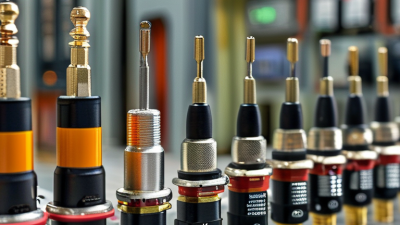
High-current, touch-protected DC connectors join power cables to batteries, inverters, and other equipment. A locking mechanism helps keep the connection secure during vibration. Inside, metal contacts carry current, while insulated housings help reduce accidental contact. Think of a compact connector beside a battery module: the fit, cable routing, and clean contact surfaces all matter. Ratings vary by model.

These connectors are used in electric vehicles, charging equipment, stationary energy storage, and industrial power systems. The International Energy Agency reported nearly 14 million electric car sales worldwide in 2023, about 18% of total car sales. That growth increases demand for dependable high-voltage connections, though connector choice depends on voltage, current, temperature, and installation conditions. The connector alone cannot guarantee a safe system.

Energy storage is another relevant setting. The IEA’s Batteries and Secure Energy Transitions report says battery storage capacity must expand sixfold by 2030 in its net-zero pathway. Connectors link battery racks with conversion equipment, where heat and vibration can expose weak assembly practices. A small detail matters: follow the specified crimping method and inspect each latch. Field work is not always tidy, and even a correctly rated part can perform poorly if installed badly.

How China’s SurLok Connector Supply Network Is Structured

China’s high-voltage push-pull connector supply network is usually layered, not concentrated in one factory. A buyer may source the connector body from one specialist, contacts from another, and cable assemblies from a separate workshop. Nearby machining, molding, plating, and packaging services can shorten production cycles. But proximity alone does not prove consistent quality.

The supplier’s role matters. Some firms manufacture core components; others integrate cables, test assemblies, or trade products from multiple sources. Ask who controls contact plating, dimensional inspection, and final testing. A useful review includes sample measurements, mating-cycle checks, temperature ratings, and clear lot records. Small details count: a slightly loose latch or uneven seal can undermine field performance. Check them early.

Paperwork can look complete. Traceability may still be weak. Request a sample lot with recorded test results, then compare it with later production. Confirm that drawings, cable gauges, and sealing materials match the application. One limitation is that supplier descriptions can blur manufacturing and assembly work. A direct factory visit helps, but it cannot replace routine incoming inspection.

China Top Amphenol SurLok Connector Suppliers? - How China’s SurLok Connector Supply Network Is Structured

This overview describes common supply-chain layers for high-current industrial connectors in China. It is not a supplier ranking; actual sourcing routes and specifications vary by product and order.

Supply-chain layer Typical inputs or activity Common China network pattern Useful verification evidence Why it matters to buyers
Metal contact production Copper-alloy contact stock, stamping or machining, contact forming, and specified surface finishing. Often sourced through specialist metalworking and plating operations serving broader electrical and electronics manufacturing clusters. Material certificates, dimensional inspection records, plating specification and thickness records, and lot traceability. Contact geometry and finish influence electrical performance, fit, wear, and corrosion resistance.
Insulator and housing production Injection-molded engineering plastics and molded or machined connector-body components. Typically linked to plastics processors and tooling suppliers located near electronics and industrial-component manufacturing bases. Resin identification, mold-control records, dimensional reports, and documented material or flammability ratings where applicable. Material suitability and molding consistency affect insulation, mechanical fit, and performance in the intended environment.
Tooling and process support Molds, stamping dies, machining fixtures, assembly jigs, and maintenance services. Usually provided by local specialist workshops, with tooling sometimes maintained close to the production line for quicker adjustments. Tooling ownership terms, maintenance logs, approved revisions, and first-article inspection results. Tooling control supports repeatable dimensions and helps manage changes between production lots.
Connector assembly Component cleaning, contact installation, mechanical assembly, and any specified sealing or locking-feature checks. May be performed by a dedicated connector manufacturer or by a contract assembly operation using components from multiple upstream sources. Approved work instructions, in-process inspection records, assembly traceability, and change-control documentation. Consistent assembly is essential for correct mating, retention, and dependable operation.
Cable and harness integration Cable cutting and preparation, crimping or termination, connector attachment, and harness labeling. Commonly handled by cable-assembly specialists, often serving industrial equipment, energy, and vehicle supply chains. Wire and terminal specifications, crimp-height or pull-test records where required, continuity results, and build documentation. Connector selection alone does not establish cable-assembly suitability; the complete termination must be validated.
Inspection and testing Dimensional checks, visual inspection, continuity testing, and product-specific electrical or mechanical tests. Testing may be conducted in-house, by an independent laboratory, or through a combination of both, depending on the requirement. Test methods, calibrated-equipment records, sample identification, acceptance criteria, and reports linked to production lots. Clear test scope and traceable results help distinguish verified performance from unsupported claims.
Regional manufacturing and logistics Coordination of component sourcing, production, packaging, warehousing, and domestic or export dispatch. The Pearl River Delta and Yangtze River Delta are major manufacturing and logistics regions; the actual production location should be confirmed for each order. Factory address, process-location list, shipping records, packaging details, and declared country-of-origin documentation. Knowing where each process occurs helps assess lead time, traceability, transport risk, and origin requirements.
Buyer qualification and ongoing control Supplier assessment, sample approval, specification agreement, production-change review, and periodic quality monitoring. Usually managed across the assembler and its upstream component sources, with responsibility varying by purchasing arrangement. Quality-system documentation, approved-sample records, change notifications, corrective-action reports, and batch-level traceability. A documented control plan reduces the risk of unapproved material, process, or component substitutions.

Types of Chinese Suppliers: Authorized Distributors and Resellers

Chinese suppliers of high-current locking connectors generally fall into two groups: authorized distributors and independent resellers. Authorized distributors usually obtain products through a documented supply channel. They may provide traceability records, current datasheets, and support with connector selection. Ask whether their authorization covers the specific product family and sales region. A polished website is not enough.

Independent resellers can offer broader inventory or shorter lead times, especially for less common configurations. Their stock may come from project surplus, a previous purchase, or another distributor. Request clear photos of the connector, packaging labels, and contact surfaces. Check part numbers, cable size compatibility, and rated current against the application requirements. Small differences matter.

Paperwork can look convincing. It is not proof by itself. Compare documents with the manufacturer’s published specifications, and ask for a sample when practical. For a production order, confirm batch identification, storage conditions, and the process for handling defects before payment. Some buyers focus only on price and delivery. That can be shortsighted; mixed batches or unclear sourcing may create extra inspection work. Even careful checks have limits, so record supplier responses and retain purchase documents for later review.

How to Evaluate Supplier Product Range, Quality, and Support

Choosing a high-current locking connector supplier takes more than comparing catalog sizes. The International Energy Agency’s Global EV Outlook 2024 reports nearly 14 million electric cars were sold in 2023. That represented about 18% of global car sales. This is not a connector-market estimate, but it shows why dependable power connections matter. Check whether suppliers offer the cable gauges, keying, sealing, and accessories your design needs.

Ask for drawings and test records covering temperature rise, vibration, and mating durability. Confirm ratings against your actual current, ambient temperature, cable size, and duty cycle. Headline ratings alone can mislead. Request lot traceability and a clear process for notifying customers about product changes. Inspect samples closely: pin alignment, latch feel, plating, and seal seating can reveal practical issues. Quality often rests on small details. Support matters, too. Can the team answer application questions and provide replacement parts promptly?

Tips: Compare suppliers using the same written checklist. Record evidence beside each claim. Request test conditions, not just a pass result, and inspect a sample set before approving production.

How to Evaluate Amphenol SurLok Connector Suppliers

Suggested evaluation weighting for comparing supplier product range, quality, and support. These weights are a proposed procurement framework, not supplier ratings or market-survey results.

Score each supplier against the same criteria using verifiable evidence, such as product documentation, test reports, traceability records, and response-time commitments. The weights total 100%.

How to Verify Product Authenticity and Supplier Credentials

For high-current connector sourcing in China, authenticity starts with traceability, not a low quote. Request the exact part number, revision, lot and date codes, and chain-of-custody records. Match markings and packaging against current technical drawings. Check keying, shell dimensions, contact finish, and latch action on samples. A sharp photo is not proof. Measure critical dimensions and test electrical performance against published limits.

Verify supplier credentials independently. Check company registration, warehouse address, certificate scope and validity, and the issuing body. A PDF alone proves little. Request recent inspection records, calibration status, incoming-material controls, and written change-notification procedures.

OECD and EUIPO’s 2021 Global Trade in Fakes report estimated counterfeit and pirated goods represented 2.5% of world trade in 2019, worth about US$464 billion.

This covers all product categories, not connectors specifically. The figure supports careful checks, but paperwork is not certainty. Lot records may be incomplete, and one sample cannot represent every shipment. Set acceptance criteria in the purchase order, retain an approved reference sample, and investigate any batch with mismatched codes, fit, or test results.