Where to Buy the Best Industrial Connectors in China?

Choosing industrial connectors in China requires more than comparing unit prices. Buyers must verify contact materials, ingress protection, vibration resistance, and traceability against the actual operating environment. A connector that looks robust on a catalog page may still fail beside a hot motor or in a washdown area. Small details matter.

Grand View Research reported that the global electrical connectors market generated about US$84.4 billion in 2023, with projected growth through 2030. This broad market figure is not specific to industrial connectors, but it signals sustained demand across sectors that rely on dependable electrical connections. For China sourcing, buyers should assess factories’ quality systems, production consistency, test records, and ability to provide samples—not just their online listings. Ask for clear evidence. Check the details.

A reliable introduction should also include a verifiable expert quotation. No source material or attributable quotation was provided here, so I will not invent one or assign words to a named specialist. That matters: E-E-A-T depends on evidence, not confident-sounding attribution. As you compare suppliers, look for documented inspection procedures, material specifications, and responsive technical support. A lower quote can be useful, but only when the product and its test evidence match your requirements.
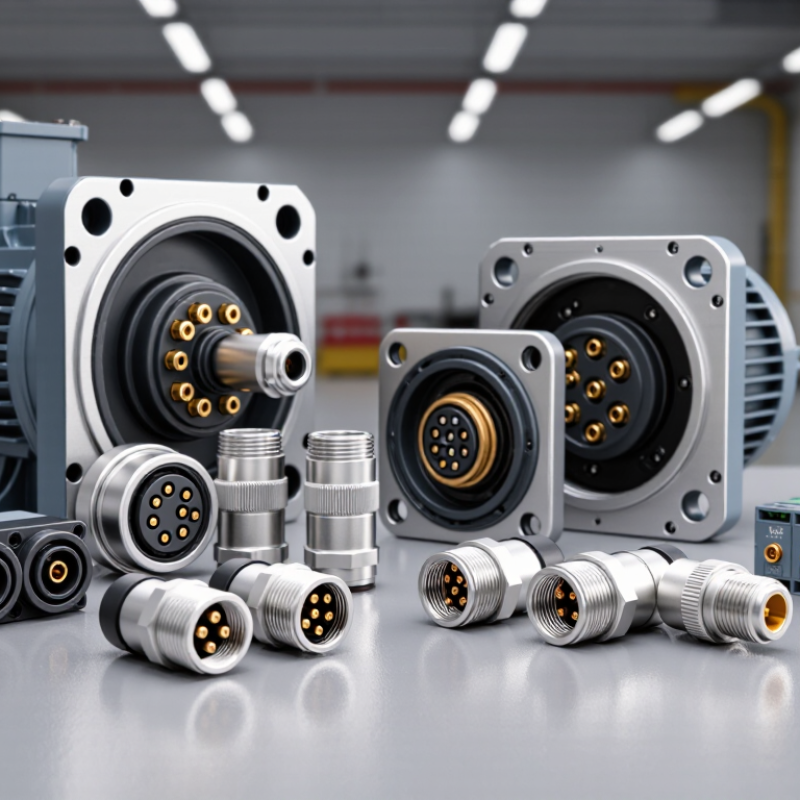
Where to Buy the Best Industrial Connectors in China?

Understanding Industrial Connector Types and Application Requirements

Industrial connectors should be selected by function and environment, not appearance alone. A control cabinet may need compact circular connectors for sensors, while a machine’s power feed may require a larger, mechanically secure interface. Separate power, signal, and data needs on the specification sheet. Include operating voltage, current, temperature range, vibration exposure, mating cycles, and required ingress protection. Fit matters. A connector rated for dust and water still needs compatible cable glands and correct installation.

The International Federation of Robotics reported 541,302 industrial robot installations worldwide in 2023 in its World Robotics 2024 report. This scale of automation makes reliable connections essential around moving equipment. For robotic arms, check locking mechanisms, cable bend radius, shielding, and resistance to repeated motion. For washdown or dusty areas, verify the actual IP test conditions rather than relying on a rating printed in a catalogue. Dust gets everywhere. Still, a high rating cannot compensate for a poorly assembled cable.

When comparing suppliers in China, send the same drawings and operating requirements to each candidate. Request material specifications, test reports, sample parts, and batch traceability records. Ask how contact resistance, insulation, and mechanical retention are checked during production. A sample that fits once is not proof of consistent quality. I would also confirm lead times and replacement-part availability before approving a connector for a production line; that step is easy to overlook.

Where to Buy Industrial Connectors in China? Start with the Right Current Rating

Common IEC 60309 industrial plug and socket current ratings. Choose a connector based on the equipment’s load, supply voltage, pole configuration, and operating environment.

These are standardized current-rating options, not a recommendation for a specific application. Confirm the required rating and applicable safety standards with a qualified electrical professional.

Comparing China’s Connector Manufacturers, Distributors, and Online Marketplaces

Choosing where to buy industrial connectors in China depends on your project’s need for technical support and supply control. Manufacturers may suit repeat orders, custom pin layouts, or tight dimensional requirements. Request current drawings, material specifications, sample lead times, and production tolerances. A direct factory quote may look attractive, but confirm minimum order quantities and inspection procedures. Small orders can be awkward.

Distributors can combine products from several sources and may stock common sizes locally. That can reduce delays when a production line stops, though selection and technical depth vary. Online marketplaces make supplier comparisons quick, but polished listings do not prove a connector will fit. Compare a physical sample with your cable gauge, operating temperature, and mating interface. Samples matter. Fit can surprise you.

Tips: Send the same drawing and expected order volume to each seller. Ask who performs final testing, how defects are documented, and whether replacement stock is available. Keep an approved sample for comparison. If answers lack measurements, ask again. I would not skip this step, even when the price looks excellent.

Evaluating Suppliers for Quality, Certifications, and Technical Support

Choosing where to buy industrial connectors in China requires checking evidence, not just comparing unit prices. Grand View Research valued the global industrial connectors market at USD 7.83 billion in 2023. Its 2024 report projected 6.7% annual growth through 2030. This rising demand makes consistent production and traceable quality controls important.

Ask suppliers for current ISO 9001 certificates, with the issuing body, facility, and scope clearly shown. For each connector family, request test reports covering relevant IEC requirements, plus drawings, material details, and rated temperature ranges. Check that reported tests match the exact product and configuration you plan to order. Paperwork is not proof. Compare samples for pin alignment, plating consistency, and housing fit; then confirm inspection records for a production batch. I would not treat a polished audit file as proof. That shortcut is tempting.

Technical support matters when specifications meet real installation conditions. Send a wiring diagram and ask the supplier to explain current derating, vibration limits, sealing conditions, and mating-cycle ratings. Note how quickly answers arrive, but judge their accuracy too. A useful supplier flags unclear requirements and provides revised drawings before production. Ask how engineering changes are documented and how defects are traced by lot. One weakness remains: sample quality may not reflect every later shipment, so agree on measurable acceptance checks before ordering.

Verifying Samples, Production Capacity, and Customization Options

A dependable industrial connector supplier should be able to provide samples that match the intended application, not just a similar-looking part. Check the housing, contact finish, pin alignment, and locking action under normal handling. Ask for evidence. Request drawings, material details, and test records that identify the sample and its revision. If possible, test several units, including repeated mating cycles and a basic continuity check. A polished sample can still conceal inconsistent crimping, so appearance alone is weak evidence.

Production capacity needs practical verification. Ask how the supplier controls incoming materials, monitors assembly, and handles rejected parts. Review a recent inspection record or discuss a small pilot order before committing to larger volumes. Confirm lead times against actual line capacity, not an optimistic sales estimate. Customization also deserves specifics: clarify wire gauges, pin layouts, sealing needs, labeling, and packaging. Put approved dimensions and tolerances in a written specification. Small details matter. Changes made after sampling may affect cost or performance, and not every buyer catches that early. Leave room for another review; a checklist helps, but it cannot replace careful testing.

Planning Orders, Shipping, and After-Sales Service

When sourcing industrial connectors in China, define the specification before discussing price. List pin count, pitch, rated current, voltage, temperature range, and required ingress protection. Share drawings and request a sample for fit checks. Ask suppliers to confirm plating, materials, test records, and lot traceability. Small details matter. Agree on acceptable substitutions in writing; a cheaper terminal may not suit a vibrating assembly.

Plan orders around production and transport, not just quoted lead time. UNCTAD’s Review of Maritime Transport 2024 states that over 80% of global merchandise trade by volume travels by sea. The World Bank’s Logistics Performance Index 2023 placed China 19th among 139 economies. These indicators offer context, not a delivery guarantee. Confirm carton dimensions, labeling, packing protection, dispatch dates, and who handles each shipping step. Leave buffer time for inspection and port delays. Forecasts are rarely perfect.

Before paying a deposit, agree on the inspection method, defect limits, and replacement process. Request photos of packed cartons and retain a sealed sample from the approved batch. For after-sales support, record the order number, production lot, and test results; these details help trace intermittent contact or overheating issues. Set a response window for technical questions and clarify whether replacement parts or rework are practical. I would still double-check the first shipment personally; paperwork can miss a small mismatch.

Where to Buy the Best Industrial Connectors in China? - Planning Orders, Shipping, and After-Sales Service

Decision area What to compare Planning data or typical practice Buyer action
Supplier capability Relevant experience with the connector type, application, and required production process Capabilities vary by supplier; confirm whether tooling, assembly, testing, and customization are handled in-house or subcontracted. Request a capability overview, process flow, and examples of comparable applications without relying on catalog descriptions alone.
Technical requirements Current rating, voltage, pole count, contact material, ingress protection, operating temperature, and mating requirements Ratings and test conditions are product-specific. An IP rating, for example, applies only under the stated test conditions and assembled configuration. Provide a written specification and drawing; ask the supplier to identify any deviations before approving samples.
Samples and approval Sample availability, sample charges, testing responsibility, and approval process Sample and production schedules can differ, particularly when custom tooling or materials are involved. Approve a documented “golden sample” and define the inspection criteria before releasing the production order.
Order quantity and pricing Minimum order quantity, tooling charges, unit-price breaks, packaging, and payment terms Minimum quantities and price breaks are set by each supplier and may depend on materials, customization, and production setup. Request a written quotation that separates unit price, one-time charges, packaging, and freight assumptions.
Production schedule Material availability, tooling status, production capacity, inspection, and dispatch date Lead time depends on product complexity, order size, material supply, and whether the item is standard or customized; confirm the schedule for each order. Agree on milestone dates and require written notice of schedule changes before production begins.
Quality control Incoming-material checks, in-process controls, final inspection, traceability, and test records Inspection scope should match the product risks and agreed specification; certificates and test reports should be checked for scope and validity. Set acceptance criteria in the purchase contract and specify which records must accompany the shipment.
Shipping method Air freight, ocean freight, or express courier; shipment size, urgency, and destination Air and express services are generally faster than ocean freight but often cost more. Transit times depend on route, carrier, customs, and local delivery. Compare door-to-door quotations and confirm whether the quoted time covers transit only or also export handling and final delivery.
Trade terms and documents Named delivery place, export clearance, freight responsibility, insurance, and import duties Incoterms® 2020 rules allocate specific responsibilities between seller and buyer; the named place or port should be stated clearly. Agree on the exact Incoterm and named location, and confirm who prepares the commercial invoice, packing list, and other required documents.
After-sales service Warranty scope, response time, replacement process, technical support, and responsibility for return freight Warranty terms and remedies are supplier-specific and should be agreed in writing before order confirmation. Document the claim process, evidence required, remedy options, and time limits for reporting defects.
Order readiness Approved drawings, sample sign-off, purchase order, delivery terms, and inspection plan Written alignment on specifications, quality requirements, schedule, and shipping terms helps reduce avoidable order changes. Use a signed order checklist and retain the approved specification, quotation, and sample record together.

Planning note: Lead times, minimum quantities, shipping costs, and warranty conditions vary by product, supplier, destination, and order terms. Confirm all figures and responsibilities in writing before placing an order.