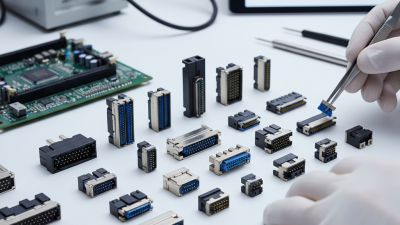
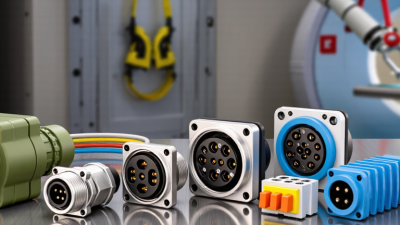
Top 10 Amphenol Contact Manufacturers for Global Buyers
Global buyers are placing greater demands on connector performance, traceability, and supply continuity. The amphenol contact sits at the center of many critical assemblies, from electric vehicles and industrial controls to medical equipment and aerospace systems. Small mating surfaces can determine whether a machine starts reliably or fails under vibration, heat, and repeated service.
Industry data supports this growing attention. MarketsandMarkets estimates that the global connectors market will expand from about USD 84 billion in 2024 to more than USD 115 billion by 2030. Its analysis points to automotive electrification, factory automation, and high-speed data systems as major growth drivers. Grand View Research also identifies transportation, telecommunications, and consumer electronics as important connector demand sectors. These trends make supplier selection more complex than comparing unit prices.
A credible manufacturer should demonstrate stable plating quality, controlled contact resistance, documented testing, and responsive technical support. Bishop & Associates’ connector industry research repeatedly highlights quality, delivery capability, and application engineering as decisive purchasing factors. In practice, buyers may need to inspect crimp consistency, housing compatibility, packaging labels, and lot-level documentation. Details matter.
This guide reviews ten leading Amphenol contact manufacturers for global buyers. It considers product range, manufacturing experience, certifications, customization capability, and export reliability. Some rankings remain debatable. Market share data is not always transparent. That limitation deserves attention, not concealment.
The aim is practical: help procurement teams compare suppliers with clearer evidence. A dependable contact should perform consistently inside the finished system, not merely appear competitive on a quotation sheet.
Define Amphenol Contact Scope Using IEC 60512 Connector Test Standards
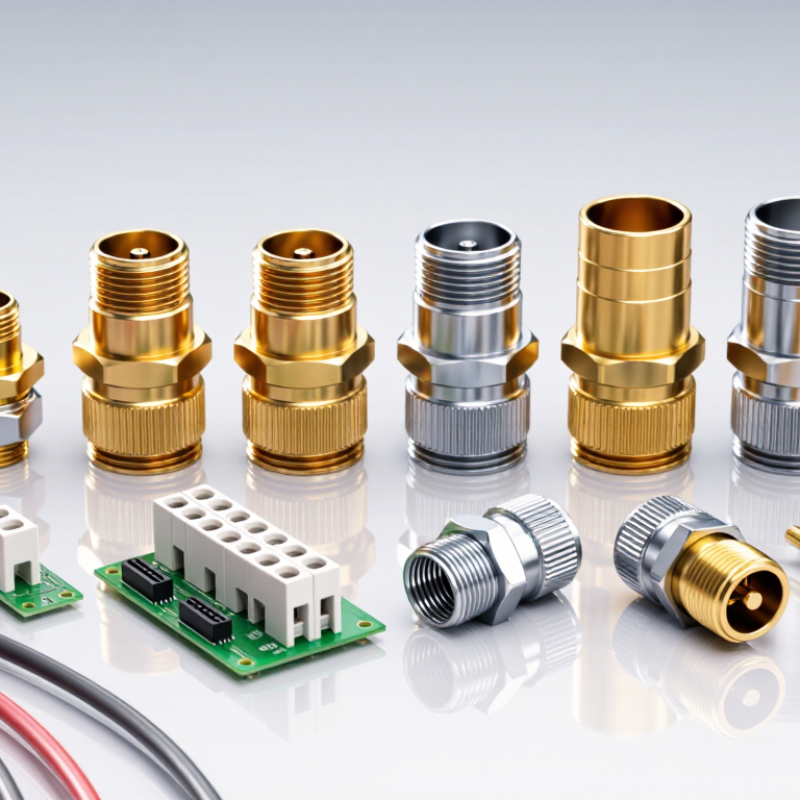
For global buyers, “Amphenol contact” should describe a measurable contact system, not a vague sourcing label. The scope may include stamped terminals, receptacles, plugs, plating, retention features, and mating interfaces. IEC 60512 provides the testing framework. It does not automatically define every product’s acceptance limit.
A practical qualification plan should specify contact resistance using IEC 60512-2-1, insulation resistance under IEC 60512-3-1, and voltage proof under IEC 60512-4-1. Durability testing also matters, especially after repeated mating cycles. Record resistance before and after cycling. Small details expose large risks. A 2024 MarketsandMarkets report estimated the global connector market at approximately USD 84 billion in 2023, showing why consistent supplier validation matters across regions. However, market size does not prove contact reliability.
Request complete test conditions from each manufacturer. Include current, temperature, mating force, plating thickness, wire size, and sample quantity. Ask whether results came from production parts or laboratory samples. That distinction is often missed. UL Solutions and other conformity-testing laboratories commonly emphasize traceable procedures, calibrated equipment, and documented deviations in product evaluations. Buyers should therefore compare reports line by line, not only compare headline resistance values. IEC 60512 offers structure, but engineering judgment remains necessary when vibration, humidity, contamination, or thermal cycling exceeds the original test profile. A perfect report can still represent an incomplete application test.
Set Ranking Criteria: Quality, Capacity, Certifications, Lead Time, and Cost
Top 10 Amphenol Contact Manufacturers for Global Buyers
A reliable Top 10 ranking needs measurable evidence, not polished catalogs. Bishop & Associates estimated the global electronic connector market at about US$84 billion in 2023. That scale makes supplier screening essential. I would score quality at 30%, capacity at 20%, certifications at 20%, lead time at 15%, and cost at 15%. Quality checks should include contact resistance, insertion cycles, plating thickness, and failure rates from production samples. Capacity should reflect monthly output, tooling depth, and backup lines.
Certifications must be verified, not assumed. Look for current ISO 9001, IATF 16949, ISO 14001, and applicable test reports. Independent laboratory evidence improves ranking confidence. Lead time should use quoted and actual delivery records across at least three orders. A low price means little if shipments arrive late or require costly inspection. Use total landed cost, including tooling, freight, rejects, and inventory holding. This is where many rankings become weak.
Tips: Request a first-article report, process flow, and material traceability record. Ask for a factory audit before awarding high-volume work. Compare identical specifications, not different plating grades. A supplier may promise ten-day delivery, but capacity data can expose seasonal risk. My scoring model is practical, yet imperfect; exchange-rate changes and sudden demand can distort cost rankings. Recheck the list every six months.
Top 10 Amphenol Contact Manufacturers for Global Buyers
Weighted benchmark ranking based on quality, production capacity, certifications, lead time, and cost efficiency
Scores are normalized on a 0–100 scale. Quality and certifications emphasize compliance and process reliability; capacity and lead time reflect supply continuity; cost measures relative commercial competitiveness. Supplier identities are intentionally omitted for a neutral buyer-focused comparison.
Profile 10 Global Manufacturers Across Amphenol-Compatible Contact Categories
Global buyers need more than a familiar catalog code. They need verified fit, stable plating, and documented production control. Grand View Research valued the global electrical connectors market at approximately USD 84.6 billion in 2023. Its forecast indicates continued growth through 2030, driven by vehicles, data infrastructure, and industrial equipment.
Our ten-manufacturer profile spans practical contact categories. One supplier focuses on stamped power contacts for high-current assemblies. Another specializes in gold-plated signal contacts for low-voltage control systems. A third produces machined circular contacts for sealed field equipment. The fourth serves rectangular industrial connectors. The fifth develops RF contacts with controlled impedance.
The sixth supplies board-to-board contacts for compact electronics. The seventh targets harsh-environment contacts with vibration resistance. The eighth supports medical and laboratory equipment. The ninth offers custom spring contacts for limited production runs. The tenth combines automated assembly with regional logistics.
Buyer audits should compare contact force, mating cycles, material certificates, and dimensional tolerances.
IEC 60512 testing remains a useful reference for mechanical and electrical connector performance. The market data looks convincing, but forecasts can overstate demand when regional projects slow. That deserves scrutiny. Ask for recent test reports, not only product brochures. Inspect plating thickness, especially around the mating zone. A bright surface can still hide poor wear resistance. Also confirm tooling ownership, batch traceability, and replacement availability before approving a second source.
Compare 2024 Revenue Scale, Production Footprint, and Regional Supply Coverage
For global buyers, the top ten contact manufacturers should be compared beyond catalog size. Their 2024 revenue scale reveals investment capacity, but revenue alone can mislead. Some suppliers reported strong connector sales, while others combined contacts with broader electronic components. Public filings, factory disclosures, and distributor checks provide a more reliable comparison.
The largest manufacturers operate multiple molding, stamping, plating, and assembly sites across North America, Europe, and Asia. Their production footprints reduce dependence on one plant. Mid-sized producers may offer shorter engineering response times and flexible minimum orders. That advantage matters for customized contact geometry, selective plating, and low-volume qualification runs. Factory depth matters.
Regional supply coverage also changes the purchasing risk. A supplier with plants in Southeast Asia may support faster delivery across China, Vietnam, and Thailand. European production can simplify replenishment for nearby industrial customers. North American warehouses may reduce emergency freight delays. However, published warehouse lists do not always prove available stock. Buyers should verify monthly output, local inventory, tooling ownership, and backup capacity.
A practical ranking should examine 2024 revenue bands, certified production sites, regional warehouses, and lead-time records. It should also review quality systems, traceability, and field experience with automotive, industrial, and communications applications. Data is not perfectly comparable. Exchange rates, reporting periods, and business segments create unavoidable gaps. I would request recent capacity evidence before treating any ranking as final.
Verify ISO 9001, RoHS, REACH, IPC/WHMA-A-620, and IP-Rating Compliance
When comparing the top 10 contact manufacturers, compliance evidence should guide every sourcing decision. ISO’s 2022 Survey recorded more than 1.26 million ISO 9001 certificates worldwide. That scale proves certification matters, but certificates alone do not guarantee stable production. Request the current certificate, site address, scope, expiry date, and registrar details. Confirm that the certificate covers contact manufacturing, not only office administration.
RoHS and REACH documentation should identify materials, revision dates, and responsible testing laboratories. For IPC/WHMA-A-620 compliance, ask for operator training records, workmanship samples, inspection plans, and corrective-action reports. IP ratings require more than a printed claim. Request test conditions, enclosure configuration, cable details, and reports aligned with IEC 60529. A connector may pass in a laboratory but fail after assembly changes. This is an uncomfortable gap in many supplier evaluations. It deserves closer review.
Tips: Build a compliance matrix for all ten suppliers. Mark each document as verified, expired, incomplete, or unconfirmed. Ask for recent lot-level traceability and change-notification procedures. Use independent laboratory testing for high-risk applications. Also check whether the supplier controls plating thickness, crimp height, and contact resistance. IPC industry research continues to highlight workforce skill and supply-chain visibility as persistent manufacturing concerns. Do not accept polished paperwork as proof of repeatable quality. Verify the process behind it.
Top 10 Amphenol Contact Manufacturers for Global Buyers - Verify ISO 9001, RoHS, REACH, IPC/WHMA-A-620, and IP-Rating Compliance
Supplier identities are intentionally anonymized. The table is a buyer-side verification framework; no certification or compliance claim should be accepted without current, product-specific evidence.
| Rank |
Supplier ID |
Typical Contact Scope |
ISO 9001 |
RoHS |
REACH |
IPC/WHMA-A-620 |
IP Rating |
Evidence Required Before Approval |
| 1 |
Manufacturer A |
Board-level crimp and stamped contacts |
Verify certificate |
Verify declaration |
Verify declaration |
Verify applicability |
Part-specific |
Current certificate, material declaration, technical drawing, and test report |
| 2 |
Manufacturer B |
Wire-to-board contact systems |
Verify certificate |
Verify declaration |
Verify declaration |
Verify applicability |
Part-specific |
Scope statement, compliance declaration, and mating-connector IP test evidence |
| 3 |
Manufacturer C |
Industrial power and signal contacts |
Verify certificate |
Verify declaration |
Verify declaration |
Verify applicability |
Part-specific |
Quality manual, RoHS/REACH statements, and environmental qualification data |
| 4 |
Manufacturer D |
Automotive-style terminals and seals |
Verify certificate |
Verify declaration |
Verify declaration |
Verify applicability |
Part-specific |
Sealing specification, IP test report, plating details, and change-control procedure |
| 5 |
Manufacturer E |
High-density signal contacts |
Verify certificate |
Verify declaration |
Verify declaration |
Verify applicability |
Part-specific |
Dimensional inspection report, process certification, and product compliance file |
| 6 |
Manufacturer F |
Harsh-environment connector contacts |
Verify certificate |
Verify declaration |
Verify declaration |
Verify applicability |
Part-specific |
Ingress-protection report, salt-spray data, temperature range, and material traceability |
| 7 |
Manufacturer G |
Precision-machined contacts |
Verify certificate |
Verify declaration |
Verify declaration |
Verify applicability |
Part-specific |
CNC process controls, plating certificate, inspection records, and product drawing |
| 8 |
Manufacturer H |
Cable-assembly termination contacts |
Verify certificate |
Verify declaration |
Verify declaration |
Verify applicability |
Part-specific |
Assembly workmanship controls, crimp-force records, compliance declarations, and continuity testing |
| 9 |
Manufacturer I |
Low-current sensor contacts |
Verify certificate |
Verify declaration |
Verify declaration |
Verify applicability |
Part-specific |
Contact-resistance data, plating specification, life-cycle testing, and material disclosures |
| 10 |
Manufacturer J |
Custom and replacement contact parts |
Verify certificate |
Verify declaration |
Verify declaration |
Verify applicability |
Part-specific |
Approved drawing, first-article inspection, quality certificate, and application-specific validation |
Verification rule: ISO 9001 certification applies to a documented management system, while RoHS and REACH evidence applies to materials or products. IPC/WHMA-A-620 applies primarily to cable and wire-harness workmanship, and IP ratings must be confirmed for the complete tested assembly and stated mounting conditions.